Eye Color Genetics Chart: How Eye Color Is Inherited
Use this eye color genetics chart to understand how melanin, multiple genes, and iris structure influence brown, blue, green, hazel, gray, amber, and mixed eye colors.
Eye color genetics is not as simple as the old school chart where brown always beats blue. That model explains part of the story, but real eye color comes from several genes working together with the amount and placement of pigment in the iris.
The most important visible factor is melanin. More melanin in the front layer of the iris usually means darker brown eyes. Less melanin allows light scattering to create blue, gray, or green appearances. Hazel and amber eyes often sit in the middle, with mixed pigment and multiple tones.
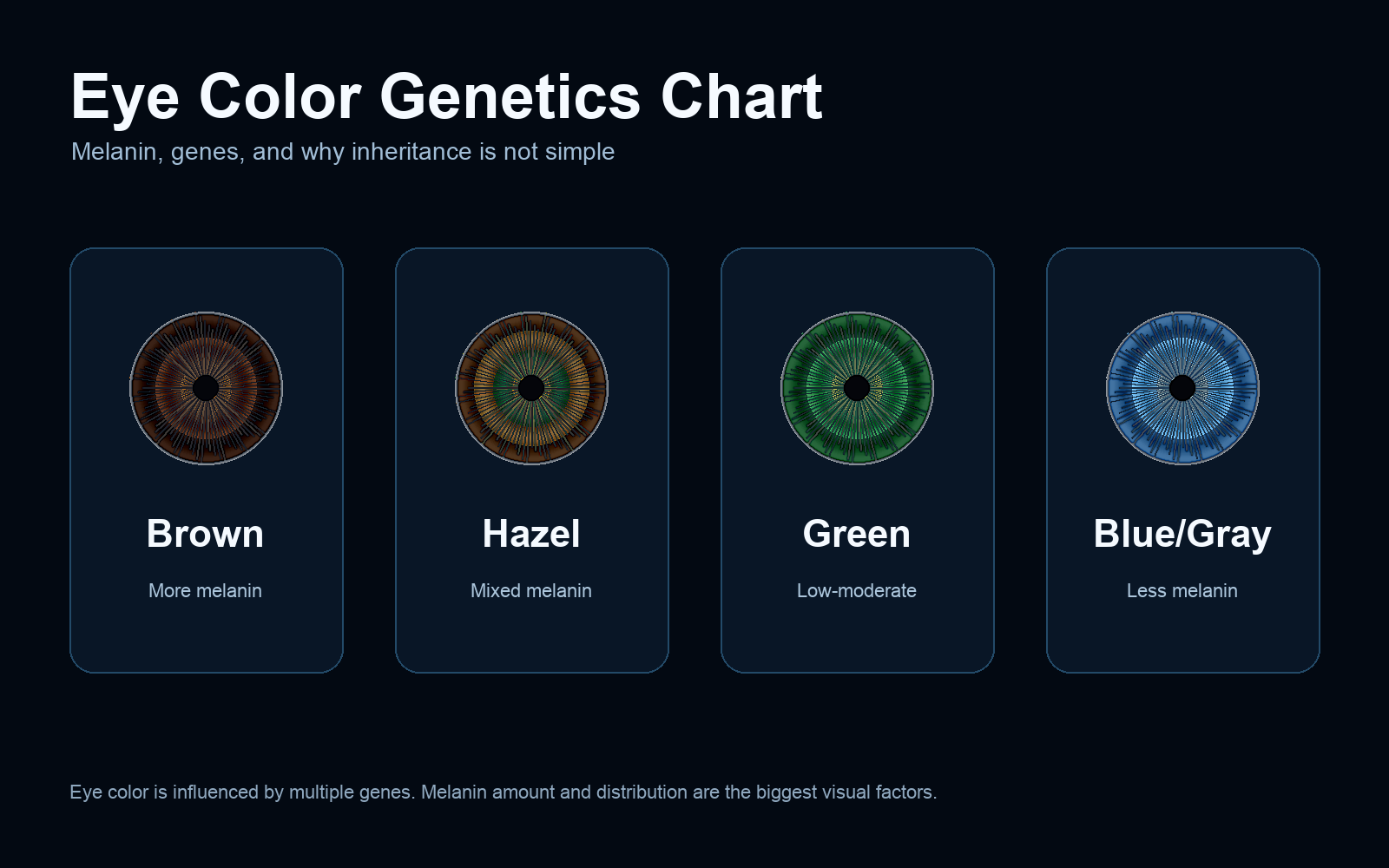
How Eye Color Genetics Works
Your iris has layers, pigment cells, fibers, and tiny structural differences that affect how light is absorbed and reflected. Genes influence how much melanin your body places in the iris and how that pigment is distributed.
Two genes often mentioned in eye color genetics are OCA2 and HERC2. They are important, especially for brown and blue eye color patterns, but they are not the whole explanation. Researchers have identified many genes that can influence eye color, which is why prediction charts are useful as guides but not guarantees.
Eye Color Genetics Chart
This chart is a simplified visual guide. It shows how common eye color families often relate to melanin levels, but it should not be read as a strict prediction tool.
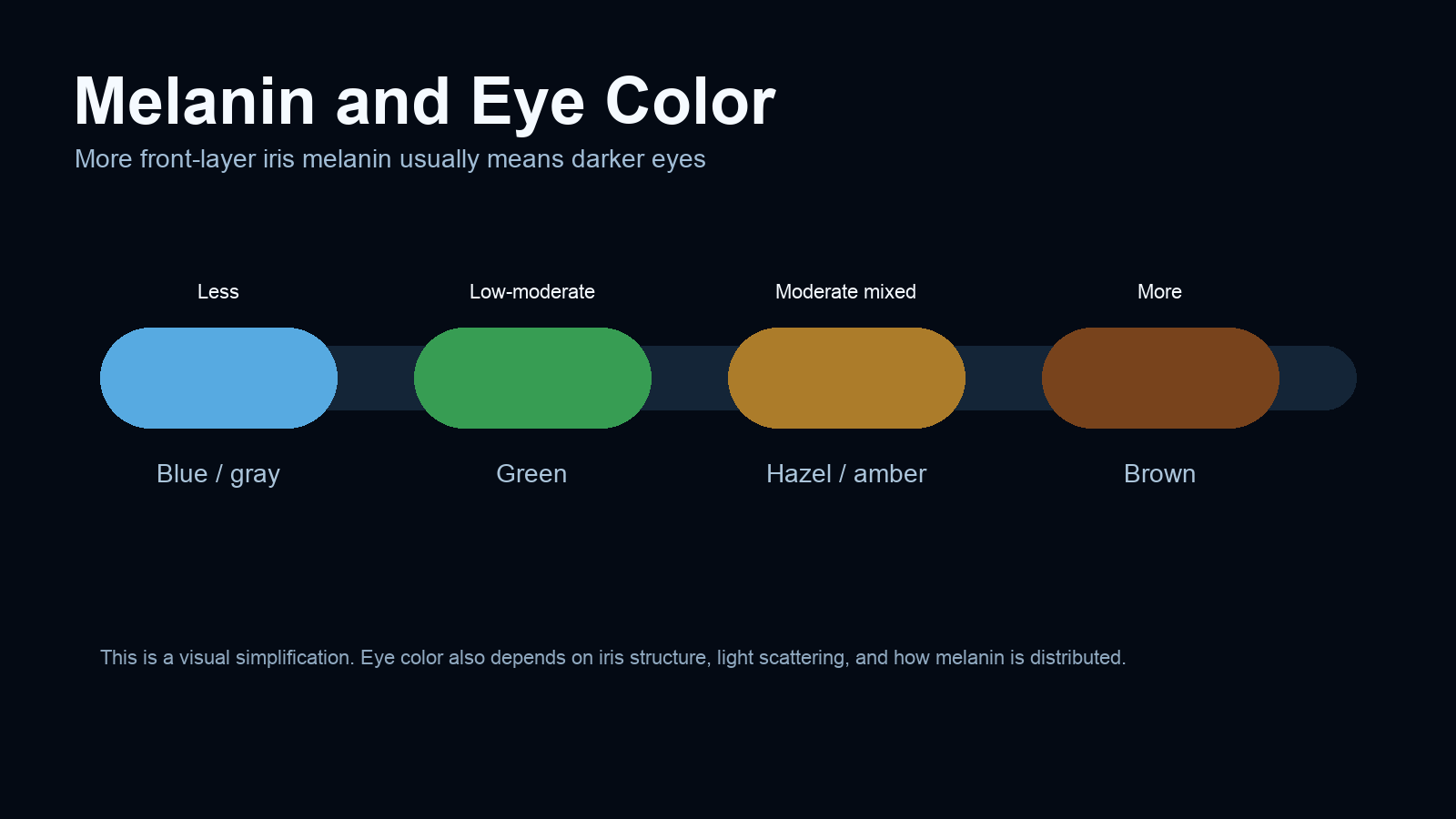
| Eye color family | Typical melanin pattern | Why it looks that way |
|---|---|---|
| Brown | Higher melanin | The iris absorbs more light, so the color appears dark brown, warm brown, or almost black. |
| Blue or gray | Lower melanin | Less pigment allows light scattering to create blue, gray, or blue-gray appearances. |
| Green | Low to moderate melanin | A mix of light scattering and small amounts of pigment can create a green tone. |
| Hazel or amber | Mixed or uneven melanin | Brown, gold, green, and amber tones can appear together, especially around the pupil. |
Can Parents Predict a Child’s Eye Color?
Parents can estimate possibilities, but they cannot guarantee an exact eye color from a simple chart. The classic dominant/recessive model says brown is dominant and blue is recessive. That is partly useful, but it leaves out many real outcomes.
For example, a child may have hazel eyes even when one parent has brown eyes and the other has blue or green eyes. A child may also develop an eye color that changes during infancy as melanin increases in the iris.
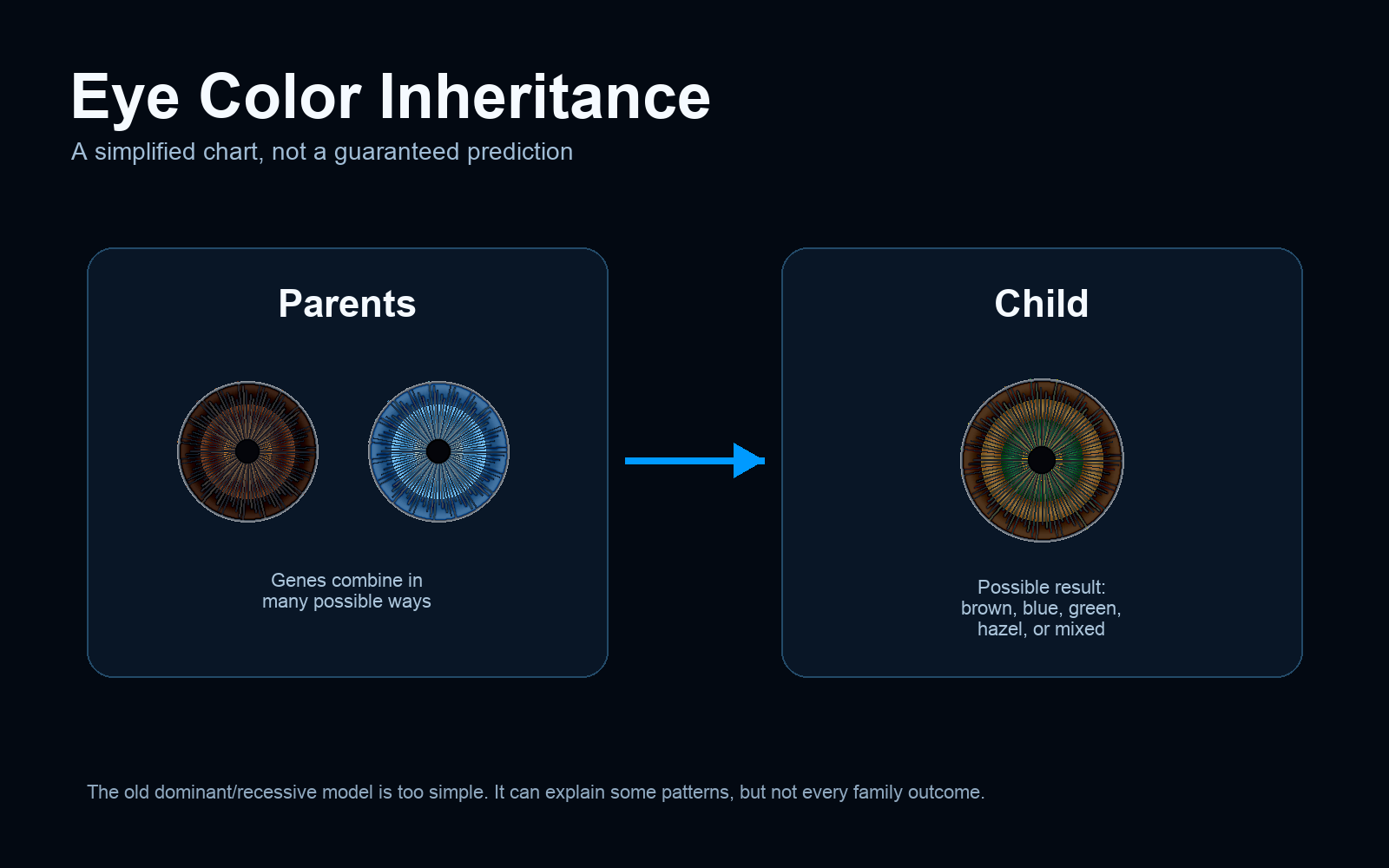
Use inheritance charts as probability guides, not as absolute rules.
Common Eye Color Genetics Myths
Eye color is one of those traits that people often explain too simply. These are the biggest myths to avoid:
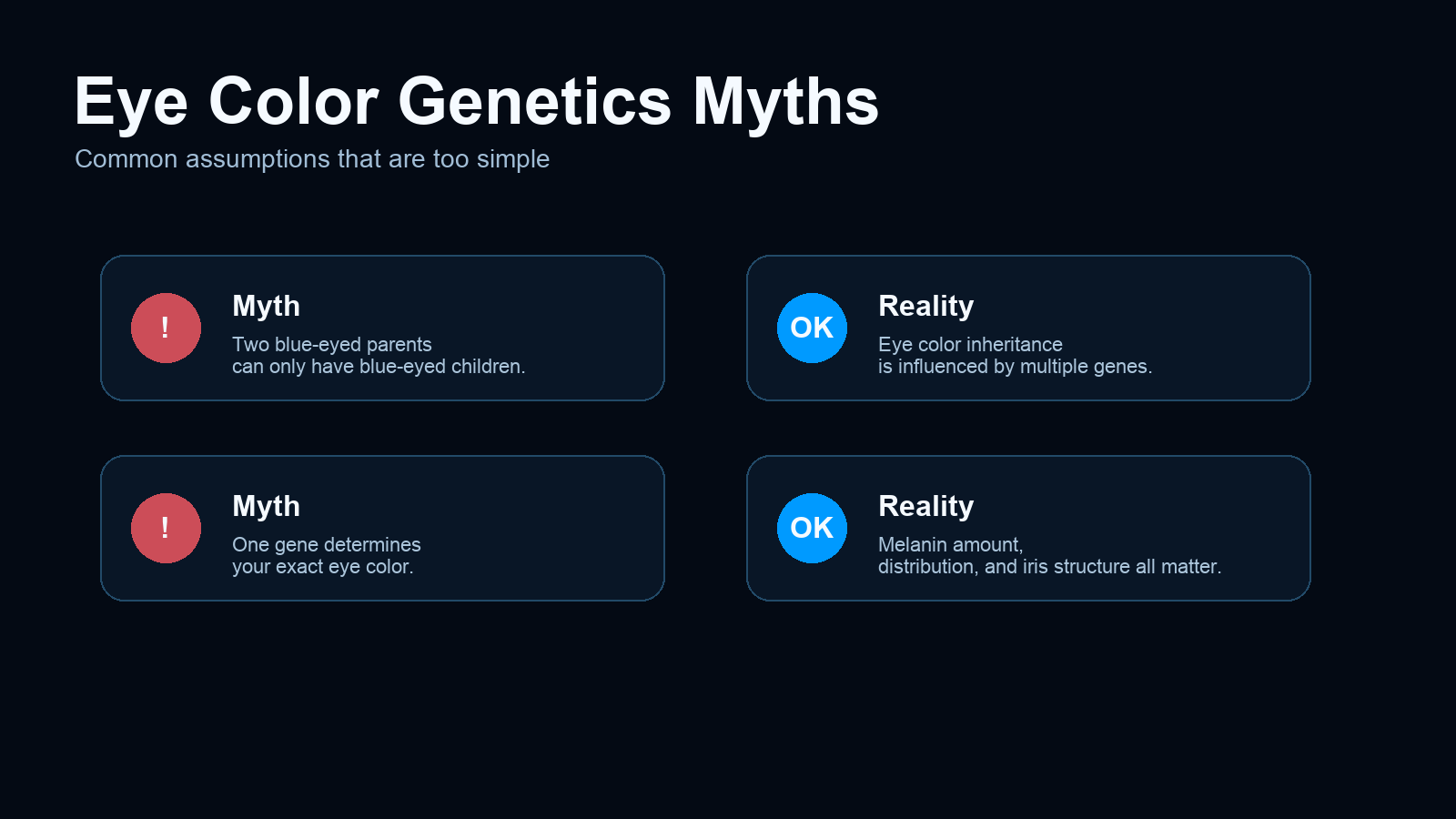
Why Your Eye Color May Look Mixed
Mixed eye colors are common because pigment is not always evenly spread across the iris. Some eyes have a darker outer ring, a golden ring around the pupil, green patches, amber flecks, or a blue-gray base with warmer tones inside.
If the area around your pupil is a different color from the rest of the iris, you may want to compare it with central heterochromia. If your eyes seem between categories, use the eye color chart and the eye color test together.
How to Check Your Own Eye Color
A genetics chart can explain why your eyes look the way they do, but it cannot see your exact iris pattern. For a more accurate result, take a close-up iris photo in natural daylight and compare the dominant color, secondary tones, and pigment rings.
Related Eye Color Guides
Use these next if you want to compare your genetics result with actual eye color names and visual patterns.
Find Your Exact Eye Color
The Eye Color Identifier app analyzes a close-up iris photo and describes your dominant color, secondary tones, rarity, and mixed patterns.
Download Free on App StoreFree to download – iOS – No login required
Eye Color Genetics FAQ
Is eye color inherited from the mother or father?
Eye color can be influenced by genes inherited from both parents. It is not controlled by only one side of the family.
Can two blue-eyed parents have a brown-eyed child?
It is uncommon, but simple charts can make eye color inheritance look more absolute than it really is. Multiple genes are involved, so unusual outcomes can happen.
Why do babies’ eyes change color?
Many babies are born with lighter eyes because melanin is still developing. As more melanin appears in the iris, eyes may darken during early childhood.
What gene causes blue eyes?
Blue eyes are strongly associated with genetic variation near OCA2 and HERC2, but eye color is influenced by more than one gene.
Why are hazel eyes hard to predict?
Hazel eyes are mixed. They often contain brown, green, gold, or amber tones, so the visible result depends on both pigment amount and pigment distribution.