Eye Color Guide
Gray Eyes: A Closer Look at the Rarest Base Color
Learn how to identify eye color gray, compare gray eyes to bluish gray and brownish grey eyes, and use simple visual checks to find your true shade.
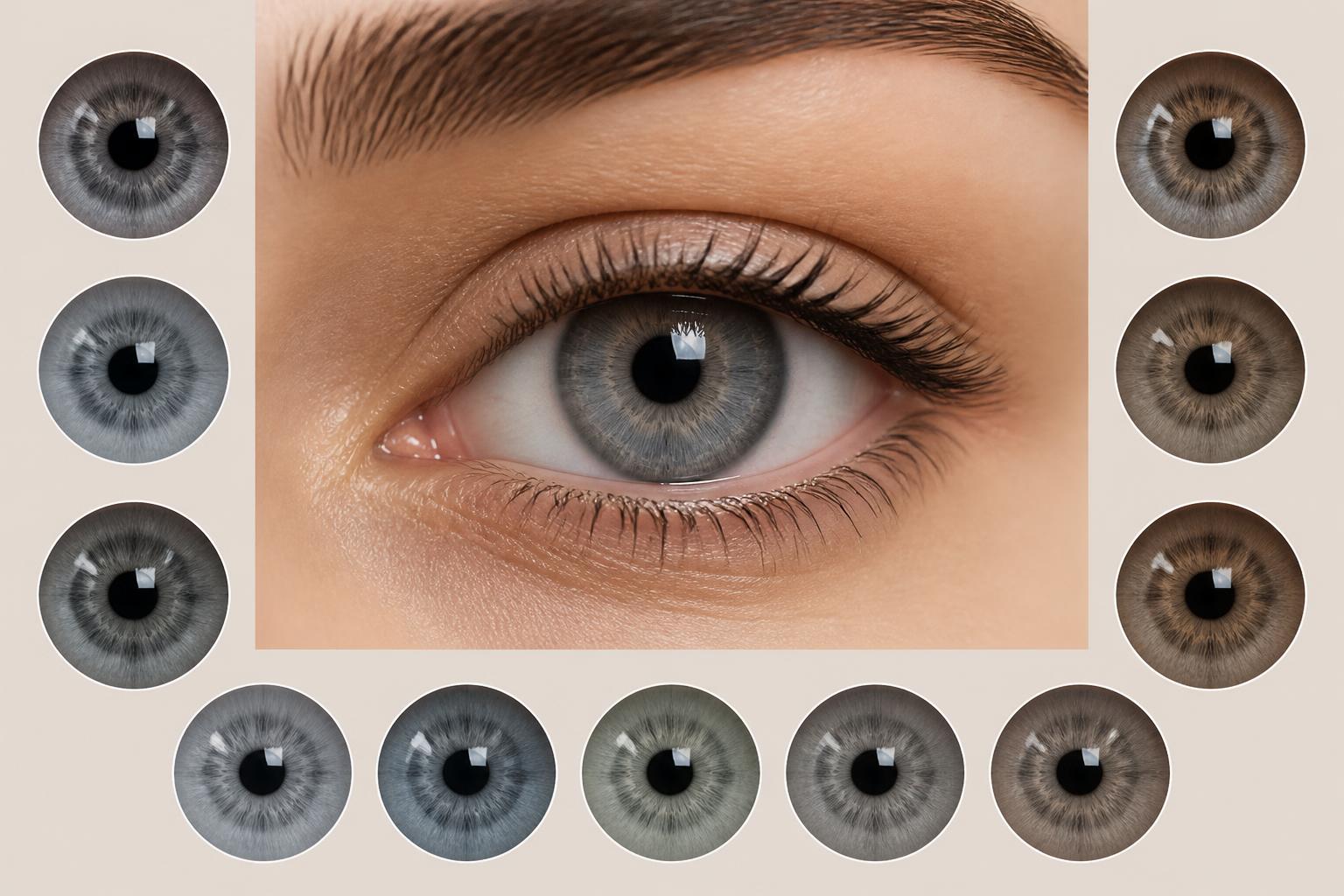
If you’re trying to identify eye color gray, you’re not alone. Gray eyes can look blue in one light, green in another, and almost silver in soft daylight. They’re one of the easiest eye colors to misread, especially in photos.
This guide shows how to compare gray eyes against nearby shades, spot common variations like bluish gray eyes and brownish grey eyes, and decide whether the iris is truly gray or just appearing that way.
If you want a quicker result after reading, you can also try the Eye Color Identifier tool for a simple visual check.
What “eye color gray” usually means
Gray eye color is a light-to-medium eye shade with low apparent warmth and a cool, muted finish. Instead of showing a strong blue, green, or brown base, the iris may look like a soft slate, silver-blue, or smoky stone color.
In practice, “gray” can describe several similar looks:
- Pure gray eyes that look mostly silver or ash-colored.
- Bluish gray eyes that lean cool and icy in daylight.
- Gray-green eyes that shift toward green near the center or outer ring.
- Brownish grey eyes that carry a warmer, muted brown cast.
People often search for eye colour grey when they mean the same thing as gray. Both spellings are commonly used, and the visual clues matter more than the spelling.
How to tell if eyes are truly gray
Because gray eyes are subtle, the best way to identify them is to compare the iris in natural light and look for consistent features across multiple photos.
Quick visual checks
- Look in daylight: Gray often appears clearest in indirect natural light.
- Check the overall base tone: A gray iris usually looks cool, muted, and low-saturation.
- Watch for color shifts: Gray eyes can seem blue outdoors and more charcoal indoors.
- Notice the outer ring: Some gray eyes have a darker limbal ring that makes the color stand out.
- Compare both eyes: A person with gray eyes may still have slight differences between left and right irises.
Lighting is the biggest reason gray eyes get misidentified. Camera filters, warm indoor bulbs, and bright sunlight can all change how the iris appears.
Gray eyes vs. nearby shades
Gray is often confused with blue, green, hazel, or even very light brown. This simple comparison table can help you narrow it down.
| Shade | What it usually looks like | How it differs from gray |
|---|---|---|
| Gray | Cool, muted, silver, ash, or smoky | Least saturated; often looks neutral or metallic |
| Bluish gray | Gray with a clear blue cast | More blue than pure gray, especially in daylight |
| Green | Soft olive, moss, or bright green tones | Has a stronger green base than gray |
| Hazel | Mix of brown, green, and gold | Usually warmer and more multicolored than gray |
| Light brown | Warm tan, amber, or honey tones | Noticeably warmer and richer than gray |
If you’re still unsure, compare your eyes to a broader reference set like the Eye Color Chart: Names, Rarity & All Eye Shades. Seeing gray next to other shades often makes the difference much clearer.
Common gray eye variations
Not every gray iris looks the same. Many gray eyes people notice are actually in-between shades with one dominant tone and a second color influence.
Bluish gray eyes
These are among the most common gray-like eyes. They often appear icy, pale, and cool-toned. In bright outdoor light, they may look almost blue; in dimmer settings, they can seem silver or steel-colored.
Brownish grey eyes
This variation is less obvious and may show a gray base with a soft brown or taupe tint. A brownish grey eye can be mistaken for hazel or light brown when viewed indoors, but it usually looks more muted and less golden than hazel.
Dark gray eye
A dark gray eye is deeper and moodier, sometimes resembling storm clouds or graphite. It can be easy to confuse with dark blue or very dark green, especially if the iris has a strong outer ring.
What features make gray eyes look different
Several features can affect how a gray iris appears from one day to the next.
- Lighting: The same eye can shift from silver to blue-gray depending on light temperature.
- Pupil size: A larger pupil can make the iris look darker overall.
- Clothing colors: Cool tones can emphasize gray, while warm tones may make it look browner.
- Eye makeup: Certain shades can amplify blue or green undertones.
- Image quality: Filters, flash, and white balance can flatten or exaggerate gray tones.
Gray eyes also sometimes show subtle patterning. A central ring, flecks, or a darker border can make them look more complex. If you want to understand ring-like patterns in your iris, see Central Heterochromia: Meaning, Rarity & Eye Examples.
A simple step-by-step way to identify gray eyes
- Use daylight near a window or outside in shade.
- Take one close-up photo without a beauty filter.
- Compare the iris to blue, green, hazel, and gray references.
- Check whether the color stays cool and muted in different light.
- Look for a true silver-gray base rather than a blue or brown base.
If you want a more guided process, try the Eye Color Test: Find Your True Eye Color Online. It’s a helpful next step when your eye color seems to shift from one setting to another.
Are gray eyes rare?
Gray eyes are generally considered uncommon, though rarity can vary by region and ancestry. They are not the same as the very rarest eye colors, but they are still less common than brown eyes in most populations.
If you’re comparing gray to other uncommon shades, you may also want to read about Rarest Eye Color: How to Compare and Identify Eye Color. That page is useful when you want to place gray eyes within the wider range of eye shade rarity.
Why gray eyes can be hard to name
Many people hesitate when describing a gray eye because the shade is often a blend rather than a flat color. A person with gray eyes may hear their eyes described as blue, green, silver, or even hazel depending on the setting.
That’s why a careful comparison works better than a quick guess. Focus on the dominant look of the iris rather than a single moment in a photo.
Gray eye color and genetics
Eye color is influenced by multiple genes, which is why gray can appear in different families and combinations. Gray often comes from a low-melanin iris with light scattering that creates a cooler appearance.
For a broader explanation of how eye colors are inherited and why shades vary, see Eye Color Genetics Chart: What Determines Eye Color?. It gives helpful context for why gray eyes may look blue-gray in one person and smoky gray in another.
FAQ about eye color gray
Is eye colour grey the same as eye color gray?
Yes. The spelling differs by region, but both usually refer to the same cool, muted eye shade.
Can gray eyes look blue?
Yes. Bluish gray eyes can appear more blue in sunlight or under cool lighting, even if the base color is gray.
Can gray eyes look brown?
Sometimes. Brownish grey eyes may show a warmer tint that looks tan or taupe indoors, but the overall effect is usually softer than true brown.
What is the best way to identify gray eyes?
Use natural light, compare the iris with other shades, and check whether the color remains cool and muted across different settings.
Can eye color change over time?
Small appearance changes can happen because of lighting, age-related shifts, or eye conditions. If you want a general overview, read What Causes Eye Color to Change in Adults? 7 Real Reasons.
Find your shade with a quick eye color check
If your eyes look gray, gray-blue, or somewhere between gray and green, the easiest next step is to compare them against a reliable reference and test them in neutral lighting. Gray is a subtle color, and a careful look usually reveals more than a first glance.
For a simple visual assist, try the Eye Color Identifier and see how your eyes compare across different conditions.
Try the Whatcoloraremyeyes app
Use the app when you want a faster photo-based check before comparing details manually.