Eye Color Chart: Names, Rarity & All Eye Shades
Compare brown, blue, green, hazel, amber, gray, and mixed eye colors with a clear visual chart, rarity estimates, and photo tips for identifying your exact shade.
If you have ever wondered whether your eyes are blue, gray, green, hazel, amber, or something in between, this eye color chart will help you compare the main eye color names, rarity levels, and common shade families.
Eye color is not always one clean label. Mixed tones, darker rings, golden flecks, or a different color around the pupil are all common. That is why a visual chart is useful before you compare your iris in natural light or use an AI eye color identifier for a more detailed result.
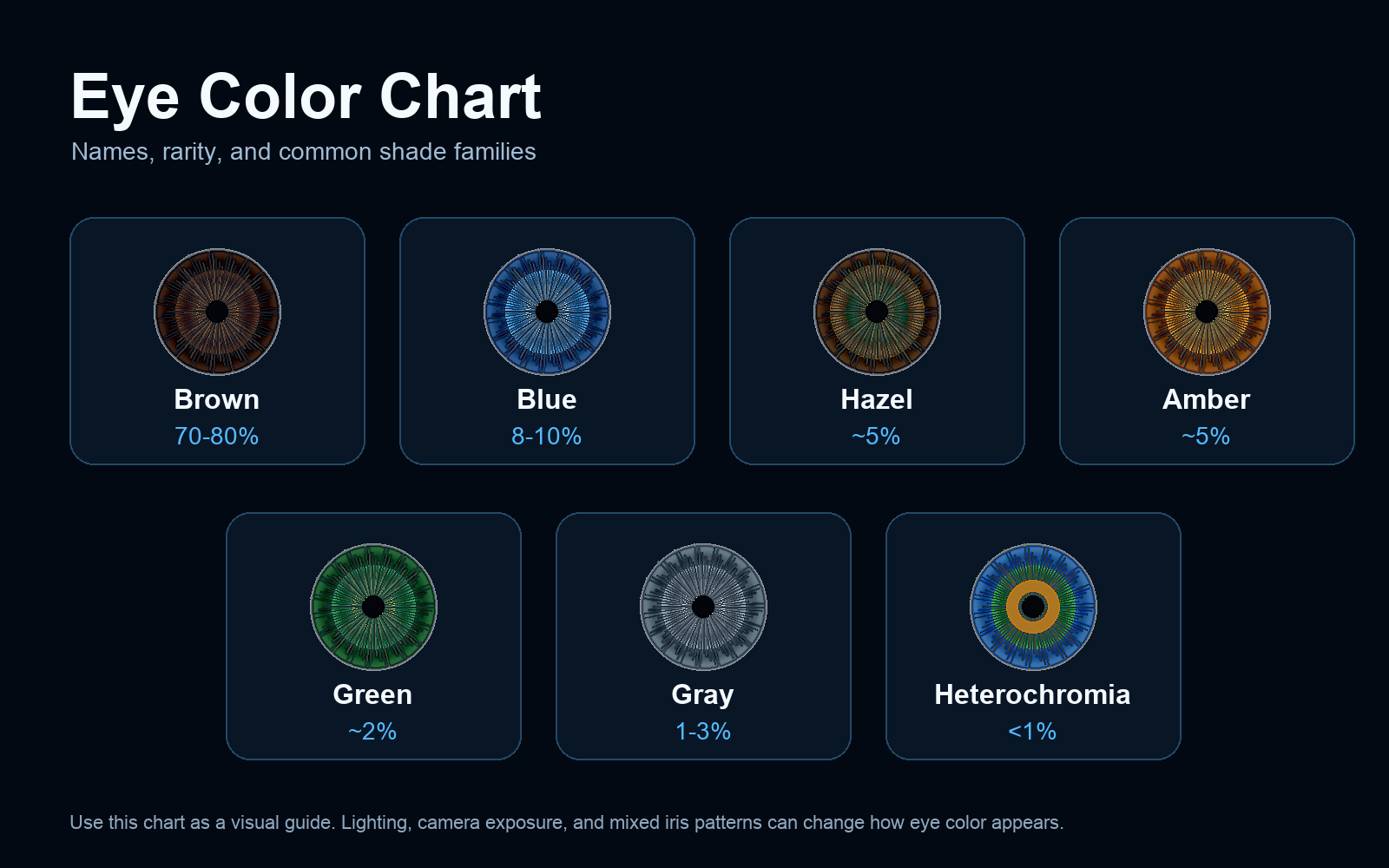
Eye Color Chart by Name
The most common eye color names are brown, blue, hazel, amber, green, gray, and very dark brown. Some people also have mixed patterns such as blue-gray, green-hazel, brown-hazel, or central heterochromia.
| Eye color | What it looks like | How common it is |
|---|---|---|
| Brown eyes | Rich brown tones from honey brown to very dark brown. The iris has more melanin than lighter eye colors. | Most common worldwide. |
| Blue eyes | Clear blue, steel blue, icy blue, or blue-gray. Blue eyes have low melanin in the front layer of the iris. | Common in some regions, but less common globally than brown. |
| Hazel eyes | A blend of brown, green, gold, and amber. Hazel eyes often look different depending on lighting. | Less common than brown or blue. |
| Amber eyes | A more solid golden, copper, or honey shade. Amber eyes usually have less green than hazel eyes. | Uncommon. |
| Green eyes | Green or green-gold tones, sometimes with yellow or brown flecks. | Rare globally. |
| Gray eyes | Cool gray, blue-gray, or silver-gray. They can look blue in some lighting and gray in others. | Rare. |
| Heterochromia | Two different eye colors, a sector of another color, or a different ring near the pupil. | Rare. |
Eye Color Rarity Chart
Eye color rarity varies by country, ancestry, and how colors are grouped. In broad global terms, brown is the most common eye color. Blue, hazel, amber, green, gray, and heterochromia are less common.
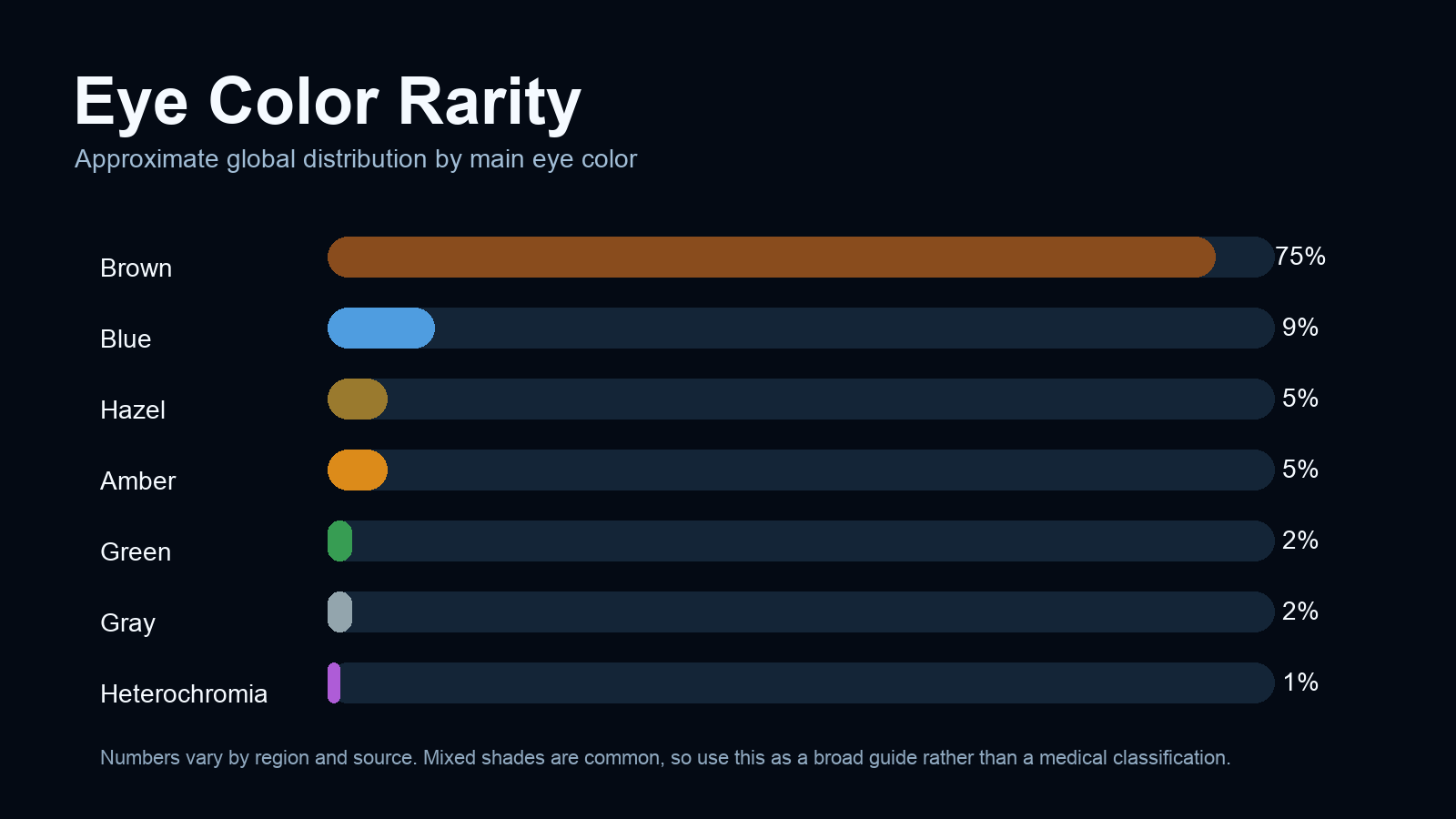
These numbers are rough estimates, not medical categories. Many eyes are mixed, and different sources classify colors differently.
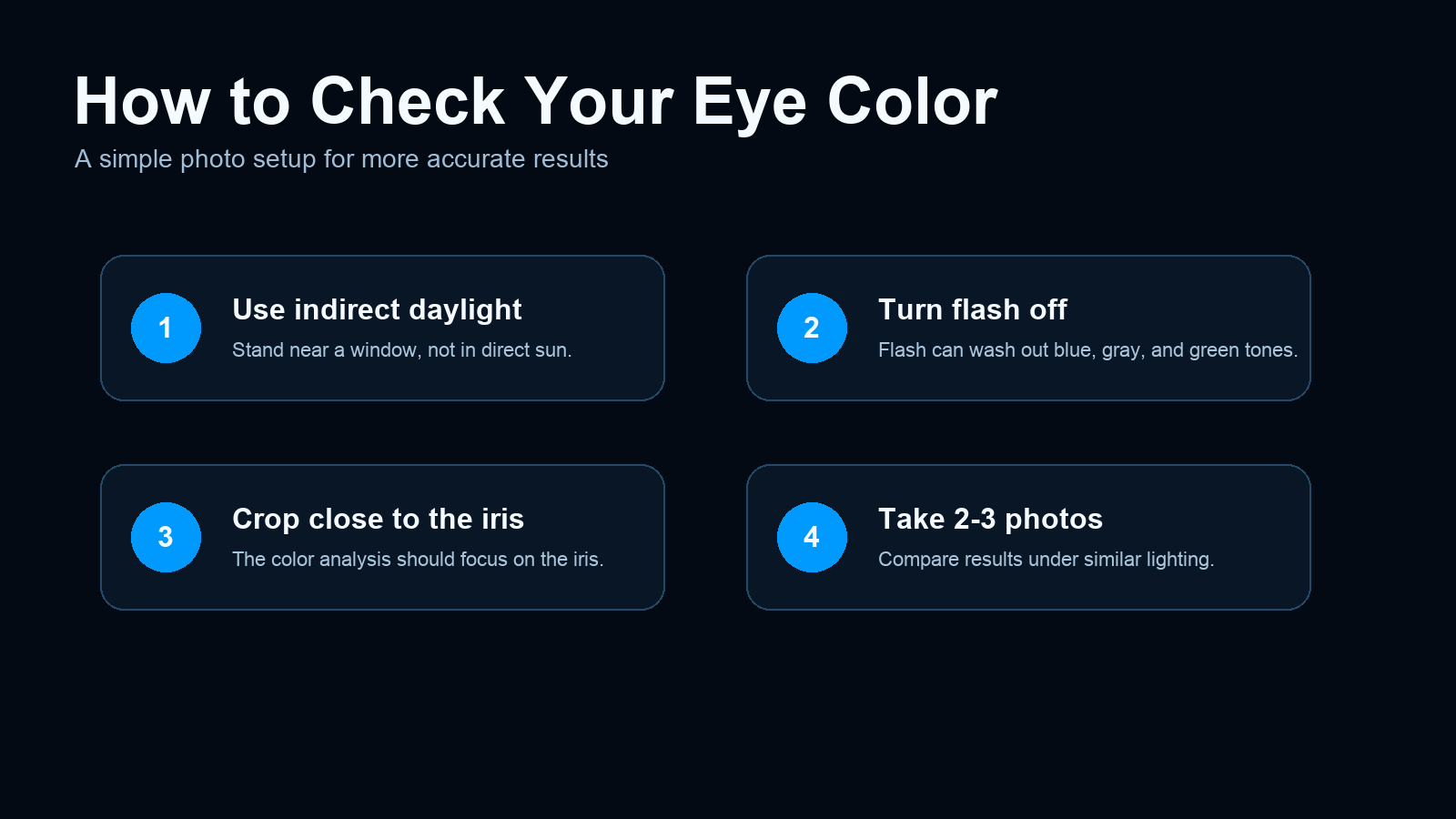
How to Identify Your Eye Color Accurately
The easiest way to misjudge your eye color is to look in poor lighting. Warm indoor lights can make blue or gray eyes look greener. Flash can make brown or hazel eyes look lighter. Shadows can make any eye color look darker.
Common Eye Shade Families
Some eye colors are easy to confuse because they sit close together visually. Blue and gray can overlap, green and hazel are often mixed, and amber can be mistaken for light brown.
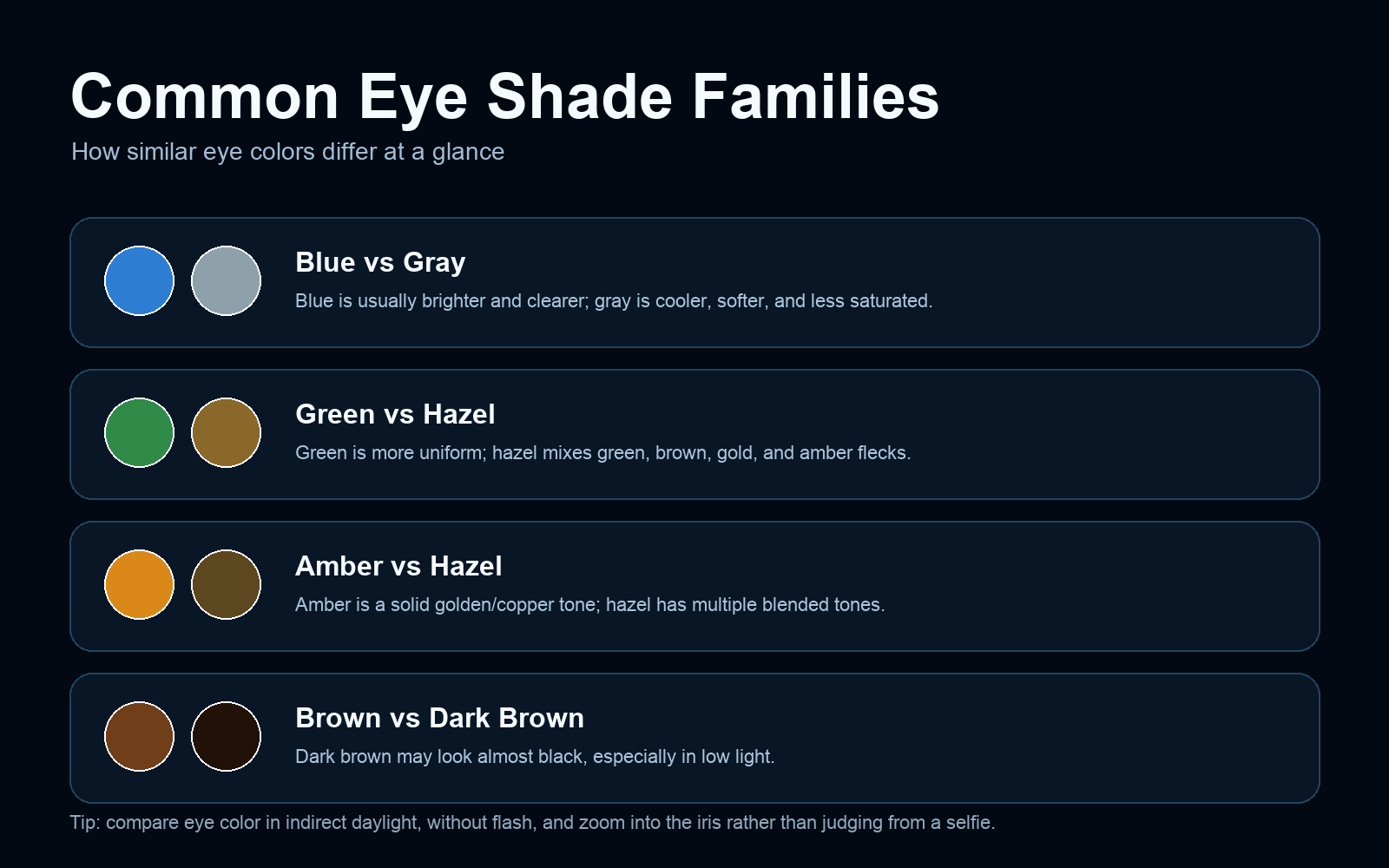
Blue vs Gray Eyes
Blue eyes usually look brighter and more saturated. Gray eyes look cooler, softer, and more muted. Many gray eyes can look blue in bright light.
Green vs Hazel Eyes
Green eyes are usually more uniform. Hazel eyes are mixed, often with brown or amber near the pupil and green toward the outer iris. If your eyes seem to shift between green and brown, they may be hazel.
Amber vs Hazel Eyes
Amber eyes are more solid gold, copper, or honey. Hazel eyes usually include a mixture of green, brown, and gold rather than one solid warm color.
What If My Eyes Have More Than One Color?
Mixed eye colors are very common. Your iris may have a darker outer ring, a golden ring around the pupil, brown flecks, or a different shade in one section.
If you see a clear ring of one color around the pupil and a different color in the rest of the iris, you may have central heterochromia. If the colors are blended throughout the iris without a sharp ring, the eye color is often described as hazel or mixed.
Use an AI Eye Color Identifier
An eye color chart is useful, but an AI eye color identifier can analyze a close-up iris photo, detect the dominant shade, and identify secondary tones like blue-gray, green-hazel, or amber-brown.
Download Free on App StoreFree to download · iOS · No login required
Eye Color Chart FAQ
What is the rarest eye color?
Green, gray, and heterochromia are usually considered among the rarest natural eye colors. Exact rankings vary because some sources group gray with blue or amber with brown.
What is the most common eye color?
Brown is the most common eye color worldwide. It has the highest amount of melanin in the iris compared with lighter eye colors.
Are hazel eyes green or brown?
Hazel eyes are usually a mix of brown, green, gold, and amber. If your iris has both brown and green tones, especially with golden flecks, hazel may be the best label.
Can eye color look different in photos?
Yes. Lighting, flash, camera exposure, pupil size, clothing, and background color can all change how your eye color appears in photos.
Can my eyes be two colors?
Yes. Some people have central heterochromia, sectoral heterochromia, or mixed eye colors with multiple tones inside the same iris.