Central Heterochromia: Meaning, Rarity & Eye Examples
Central heterochromia means the iris has a different color ring around the pupil. Learn what it looks like, how rare it is, how it differs from hazel eyes, and when a color change should be checked.
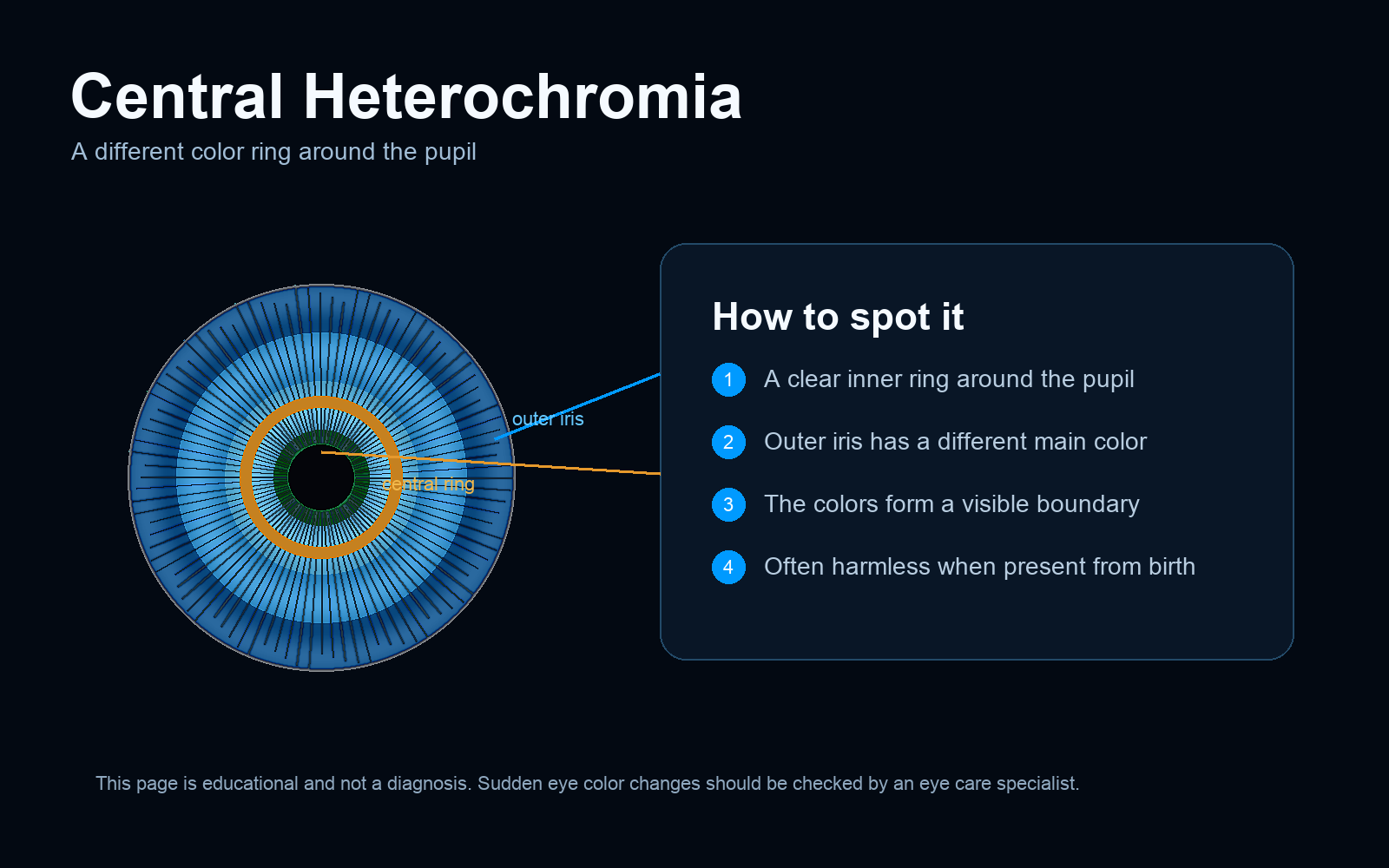
Central heterochromia is an eye color pattern where the inner part of the iris has a different color from the outer part. In many eyes, this appears as a gold, brown, amber, or green ring around the pupil.
It can show up in blue eyes, green eyes, brown eyes, hazel eyes, or mixed eye colors. The important detail is the structure: the color difference forms a visible inner ring instead of being blended evenly across the whole iris.
What Is Central Heterochromia?
Central heterochromia is a type of heterochromia. Heterochromia simply means there is a difference in iris color. With central heterochromia, the difference is located near the center of the iris, around the pupil.
For example, someone may have blue outer irises with a golden or amber ring near the pupil. Another person may have green eyes with a brown central ring. The pattern can appear in one eye or both eyes.
Quick rule: if the eye has a clear inner ring of one color and a different outer iris color, it may be central heterochromia. If the colors are blended throughout the iris, it is often described as hazel or mixed eye color.
Types of Heterochromia
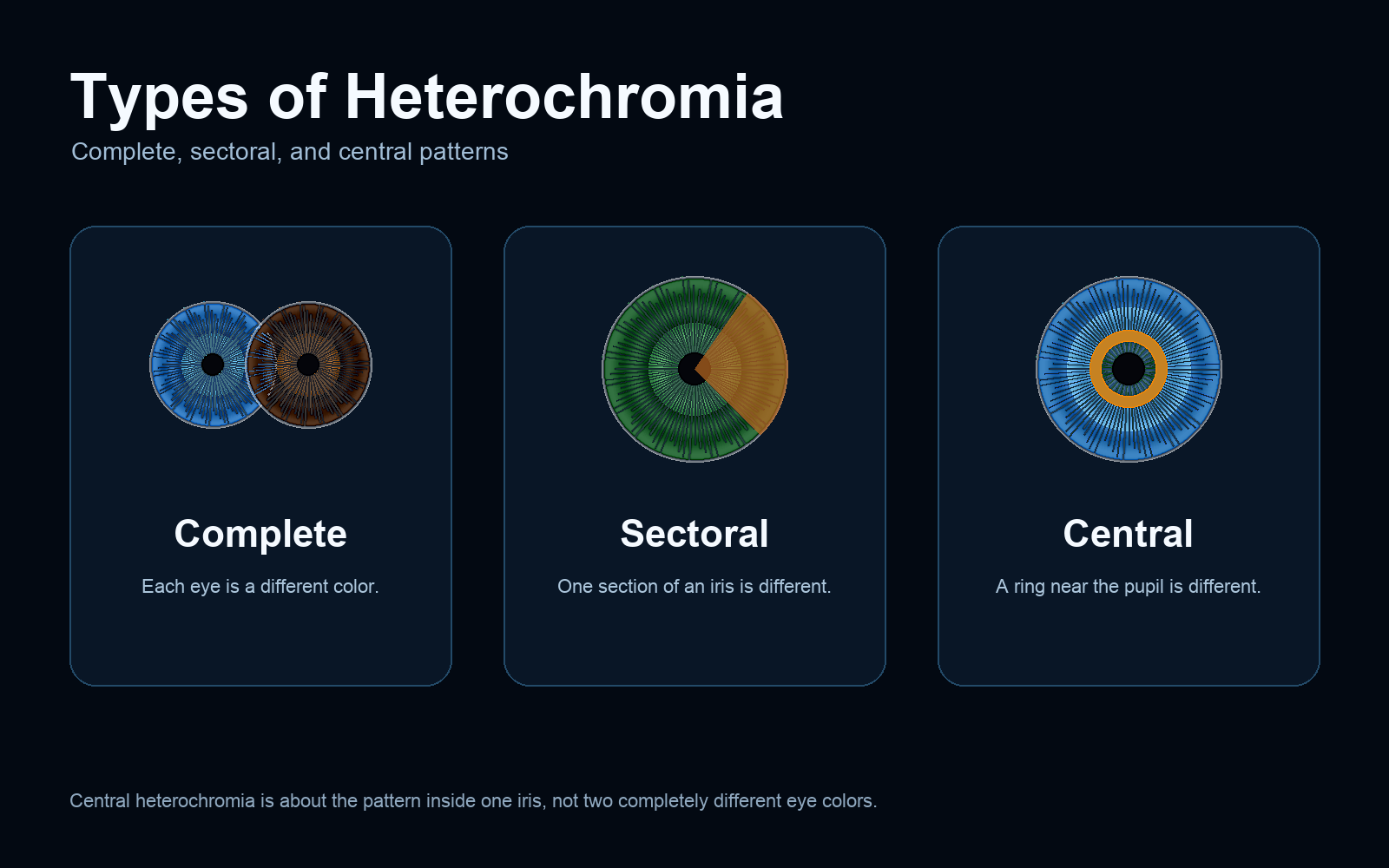
There are three common ways people describe heterochromia: complete, sectoral, and central. Central heterochromia is usually less dramatic than complete heterochromia because both eyes may still look similar at first glance.
| Type | What it looks like | Example |
|---|---|---|
| Complete heterochromia | One eye is a different color from the other eye. | One blue eye and one brown eye. |
| Sectoral heterochromia | One section of the same iris has a different color. | A brown wedge inside a green iris. |
| Central heterochromia | A ring around the pupil is a different color from the rest of the iris. | A gold ring in the center of a blue iris. |
Central Heterochromia vs Hazel Eyes
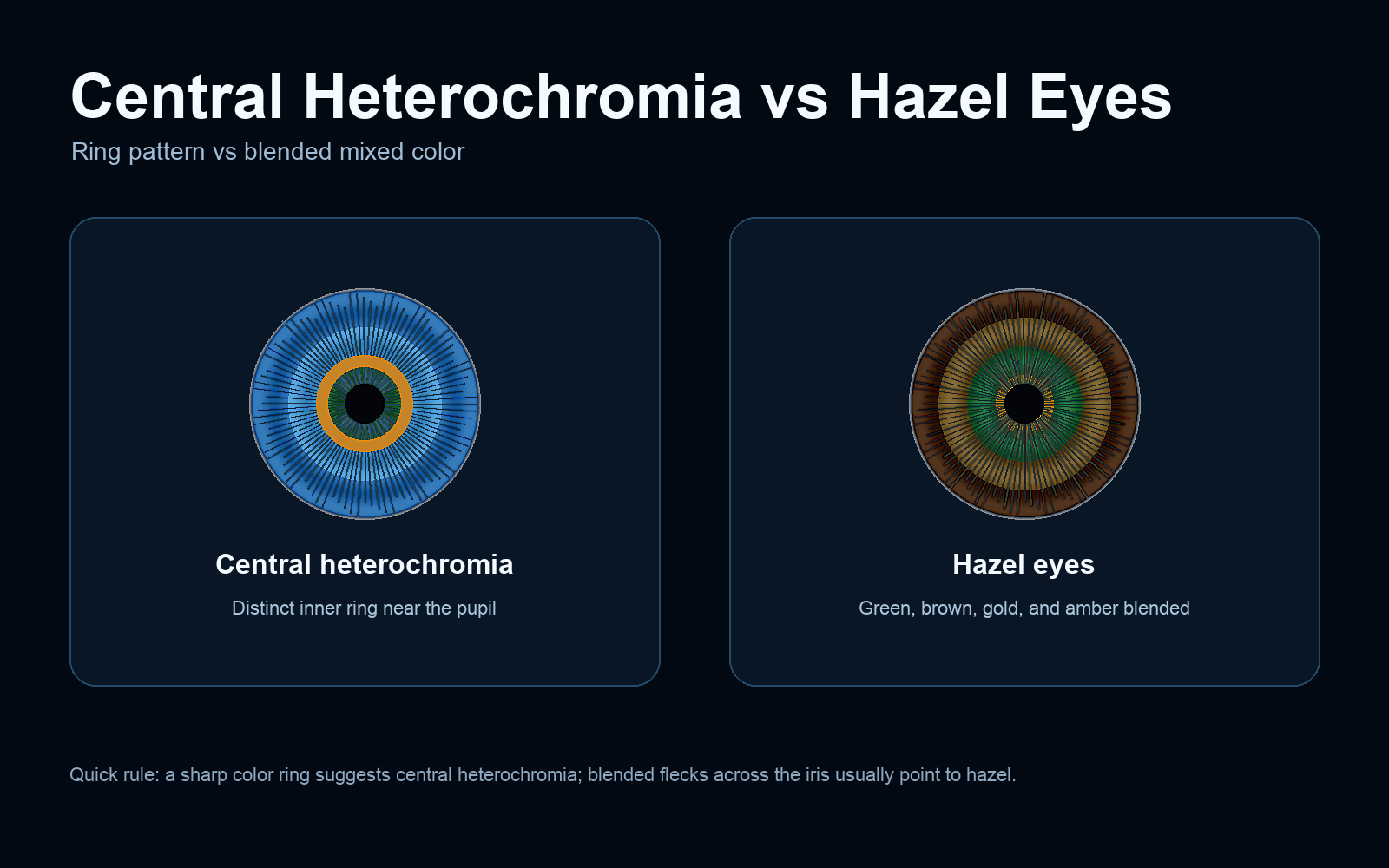
Central heterochromia and hazel eyes are easy to confuse because both can include brown, gold, green, and amber tones. The difference is usually the border between the colors.
Central heterochromia has a more distinct inner ring around the pupil. Hazel eyes usually have colors that blend together more gradually across the iris.
How Rare Is Central Heterochromia?
Central heterochromia is considered uncommon, but exact numbers are hard to measure. Many people have mixed eye colors, and different sources classify iris patterns differently.
It is usually described as a rare or uncommon form of heterochromia, but it is also more subtle than having two completely different eye colors. That means many people may not notice it until they look closely at the iris in good lighting.
If your inner iris ring is visible only in certain photos or lighting, that does not automatically mean something is wrong. Natural iris color can look different depending on light, pupil size, camera exposure, and surrounding colors.
How to Check for Central Heterochromia
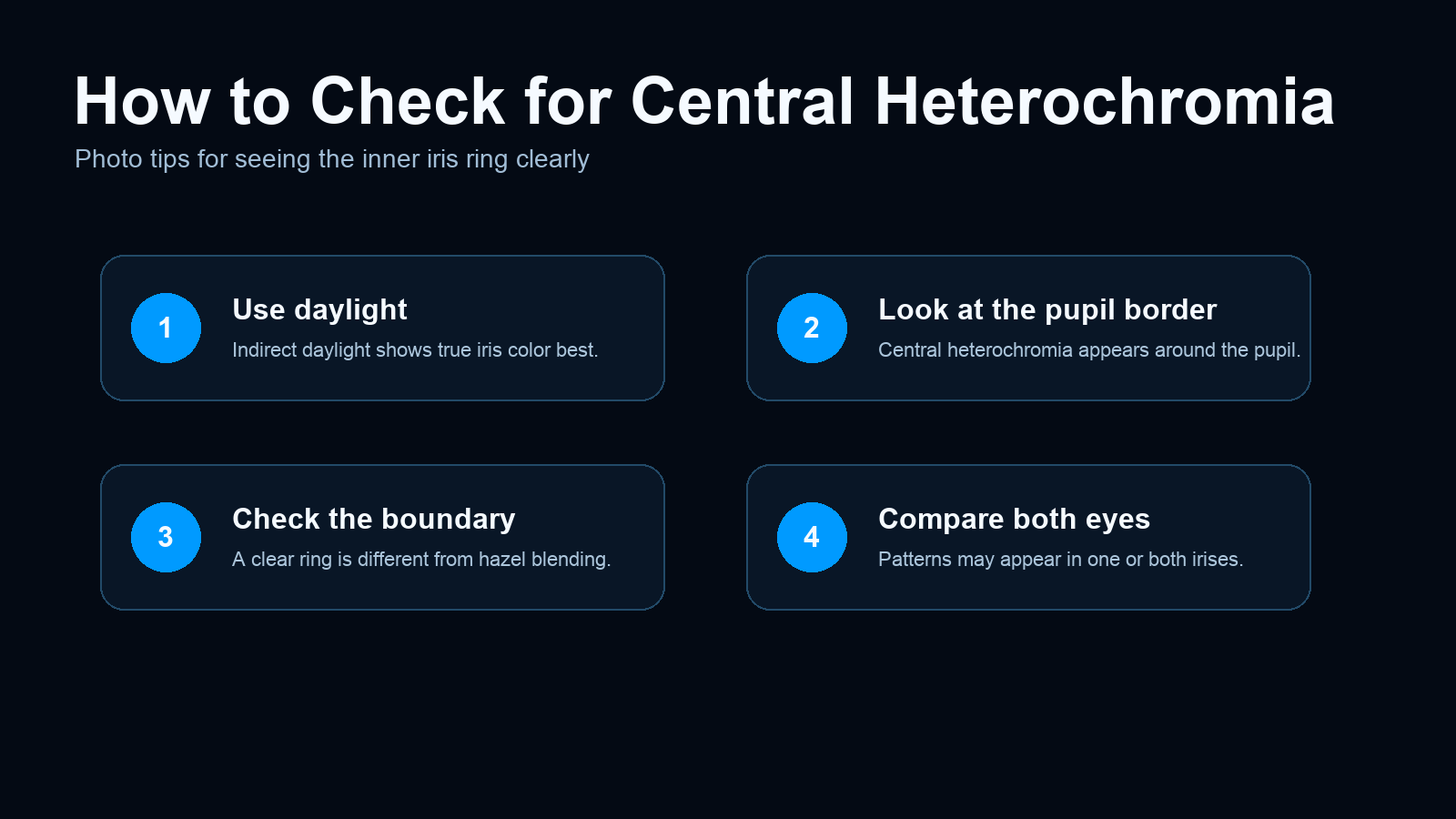
The best way to check your iris pattern is to use indirect daylight and a clear close-up photo. Avoid flash, direct sun, heavy filters, and dark indoor lighting because they can change the way eye color appears.
Can Central Heterochromia Be Normal?
Yes. If the pattern has been present since childhood and both eyes feel normal, central heterochromia is often just a natural iris color variation.
But if one eye changes color suddenly, if the color difference appears after an injury, or if you also notice pain, redness, vision changes, light sensitivity, or a change in pupil shape, it is safer to see an eye care specialist.
Important: this article is for education only. It cannot diagnose eye conditions. Sudden or one-sided eye color changes should be checked by an optometrist or ophthalmologist.
Common Central Heterochromia Patterns
Central heterochromia can appear in many color combinations. The most noticeable versions often have a warm inner ring and a cooler outer iris color.
| Pattern | What people often notice | Similar search |
|---|---|---|
| Blue eyes with brown center | A blue outer iris with amber, gold, or brown around the pupil. | Blue central heterochromia |
| Green eyes with brown center | A green iris with a darker brown ring in the middle. | Green central heterochromia |
| Hazel eyes with central ring | A mixed iris where the inner color is more defined than the outer blend. | Central heterochromia or hazel |
| Brown eyes with golden center | A warm gold or amber inner ring inside a brown iris. | Brown central heterochromia |
Related Eye Color Guides
If you are trying to name your exact eye color, compare central heterochromia with eye color charts, hazel eyes, and photo-based identification.
Check Your Eye Color with AI
An AI eye color identifier can analyze a close-up iris photo and help describe the dominant color, secondary tones, and patterns like central heterochromia or hazel blending.
Download Free on App StoreFree to download · iOS · No login required
Central Heterochromia FAQ
What does central heterochromia mean?
Central heterochromia means the area around the pupil is a different color from the outer iris. It often looks like a colored ring in the center of the eye.
Is central heterochromia rare?
It is usually considered uncommon, but exact numbers vary because many eyes have mixed colors and there is no single everyday standard for classifying iris patterns.
Is central heterochromia the same as hazel eyes?
No. They can look similar, but central heterochromia usually has a clearer ring around the pupil. Hazel eyes usually have green, brown, gold, and amber tones blended across the iris.
Can central heterochromia appear in blue eyes?
Yes. A common-looking example is a blue outer iris with a gold, amber, or brown ring around the pupil.
Should I worry if my eye color changes?
If the pattern has always been there, it is often just a natural variation. If your eye color changes suddenly or only one eye changes, especially with pain or vision symptoms, see an eye care specialist.