Eye Color Guide
Green Eye Color: Why So Few People Have It
Learn how to identify eye color green with clear examples, comparison tips, and a simple chart for green, hazel, bluey green, bluish green, pale green, and more.
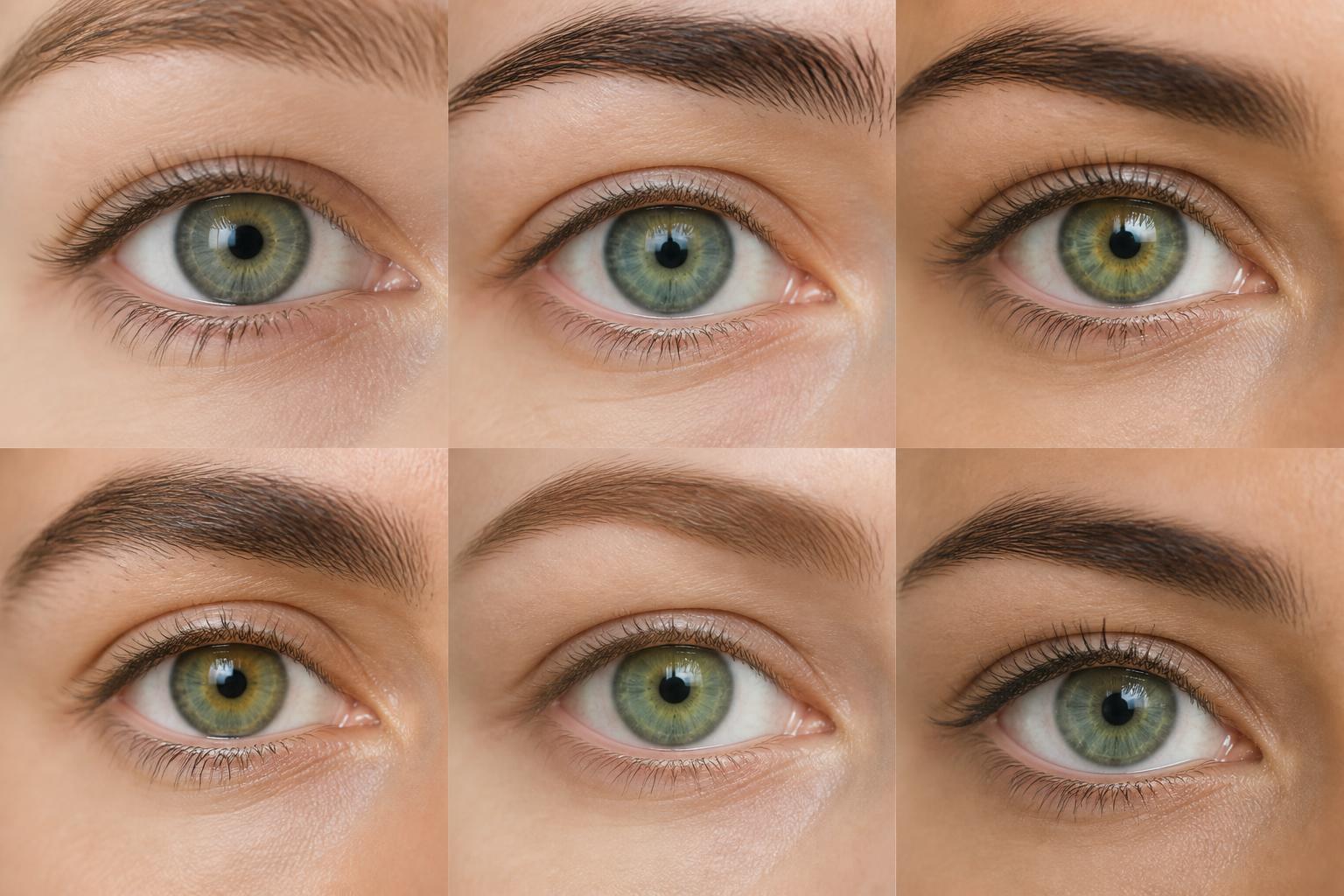
If you’re trying to identify eye color green, the tricky part is that green rarely looks like one single shade. A person may have a green eye that shifts between pale green, bluish green, or hazelnut green eyes depending on light, clothing, and surrounding colors. In many cases, the iris includes more than one color, which is why people often compare photos instead of relying on memory.
This guide shows how to compare and identify green eyes in a practical way. You’ll see how green can appear in different lighting, how it differs from hazel or blue-green eyes, and what features to look for when naming the shade accurately.
What does eye color green usually look like?
Green eyes usually have a noticeable green base with little to no strong brown dominance. The exact appearance can range from soft and grayish to bright and vivid. Some eyes look like a pure green shade, while others lean more mixed, creating bluish green eyes or hazel-green combinations.
Because iris color is affected by melanin, light scattering, and surrounding pigments, green can appear differently from one person to another. That is why two people can both say they have green eyes and still look quite different in photos.
Common green eye variations
- Pale green eyes: light, airy, and often slightly gray or yellow-toned.
- Bluish green eyes: a cool mix where blue is visible alongside green.
- Bluey green eyes: a softer version of blue-green that may look cooler in daylight.
- Hazelnut green eyes: green with brown, amber, or golden flecks mixed in.
- A green eye: sometimes one eye looks more distinctly green than the other, especially if the irises are unevenly pigmented.
Quick comparison chart: green vs. similar eye shades
| Eye shade | What you usually see | How it differs from true green |
|---|---|---|
| Green eyes | Green is the main visible color | Usually less brown than hazel |
| Hazel eyes | Brown, gold, green, or amber mixed together | Brown or amber often dominates more than in green |
| Bluish green eyes | Green with a cool blue cast | Blue tint is more obvious than in standard green |
| Pale green eyes | Light green, sometimes gray-green | Less saturated than bright green |
| Yellow green eye | Green with golden or yellowish tones | Yellow or gold flecks can make the iris look warmer |
| Central heterochromia | Different inner ring around the pupil | Green may appear only in the outer iris or as a ring pattern |
How to identify eye color green accurately
The easiest way to identify eye color green is to compare it in consistent lighting and look at the dominant color across the full iris, not just one spot. A close-up selfie in daylight can be helpful, but indoor lighting may distort the result.
Step-by-step comparison method
- Look at the iris in natural light, preferably near a window.
- Check whether green is the main color or only part of a mixed pattern.
- Compare the iris to an eye color chart rather than guessing from memory.
- Notice whether the eye looks cooler (blue-green) or warmer (yellow-green or hazel-green).
- Look for rings, flecks, or gradients that may change how the eye is labeled.
If you want a more structured approach, the Eye Color Test: Find Your True Eye Color Online can help you compare shades more consistently.
Features that often make green eyes look different
Green eye color can be influenced by several visual features in the iris. These details matter because many eyes are not a flat, single-color surface. Instead, they include layers that create the final shade you see.
- Melanin amount: lower melanin often allows lighter, greener shades to show more clearly.
- Golden or brown flecks: these can make green look hazel or yellow-green.
- Blue undertones: these can shift green toward bluish green eyes.
- Central ring around the pupil: this may point to central heterochromia, where different colors appear in the inner iris.
- Lighting: sunlight often makes green stand out more than indoor yellow lighting.
Tip: When naming eye color, focus on the color that dominates the iris most of the time, not the shade it turns in one photo.
Green eyes or hazel?
One of the most common identification questions is whether the eyes are truly green or actually hazel. The difference is subtle, but important. Green eyes are usually read as green first, while hazel eyes typically show a stronger mix of brown, gold, and green.
If the iris looks green with noticeable brown or amber sections, it may be closer to hazel than a pure green shade. For a fuller breakdown, see Hazel Eyes: Color, Rarity, Meaning & Examples.
Simple rule of thumb
- Green eyes: green is the main impression.
- Hazel eyes: the eye looks mixed, often with brown or golden dominance.
- Green-hazel: a blended look that sits between the two.
How green changes under different light
Green is one of the most light-sensitive eye colors. The same iris can appear more vivid outdoors and more muted indoors. If you have bluey green eyes or pale green eyes, your color may seem to change depending on the time of day.
- Direct sunlight: often makes green more noticeable and bright.
- Shade: can make the eye appear cooler, grayer, or bluer.
- Warm indoor light: may add yellow or amber tones.
- Flash photography: can flatten detail and hide subtle green variation.
This is why eye color identification works best when you compare more than one photo, preferably taken in different lighting conditions.
Green eye color and genetics
Green eye color is linked to genetic variation that affects how much pigment is present in the iris and how light is scattered. It is not controlled by just one simple switch. Instead, multiple genes contribute to the final look, which is why siblings can have different eye colors or different shades of the same color.
If you want a deeper explanation of how inheritance works, the Eye Color Genetics Chart: What Determines Eye Color? is a useful companion resource. For a broader overview of all shades, the Eye Color Chart: Names, Rarity & All Eye Shades can also help you place green in context.
Best way to name a green eye shade
When you describe eye color green, try to name the dominant shade plus any visible undertone. That makes your description more accurate and easier to compare with charts or photo-based tools.
- Green for a straightforward green iris
- Pale green for a light, soft appearance
- Bluish green for a green eye with a clear blue cast
- Bluey green for a cool, mixed tone that leans toward blue
- Yellow green for a warmer green with golden tones
- Hazelnut green eyes for a green-brown blend
If the eye changes a lot between photos, it may help to compare it with the complete guide at What Color Are My Eyes? The Complete Guide to Identifying Your Eye Color.
Eye Color Identifier CTA
If you want a quicker, more visual comparison, try the Eye Color Identifier app. It can be a helpful way to explore subtle shades and compare what you see against common eye color categories. You can find it here: Eye Color Identifier on the App Store.
FAQ: eye color green
Can green eyes look blue sometimes?
Yes. Green eyes can appear more blue in cool lighting, low light, or photos with strong contrast. That is especially common in bluish green eyes and bluey green eyes.
Are pale green eyes still considered green?
Usually yes, if green is still the main visible color. Pale green eyes are simply a lighter version of green.
What is a yellow green eye?
A yellow green eye is a green iris with obvious golden or yellow-toned pigment. It can look warmer than standard green and may overlap visually with hazel.
How do I know if I have green or hazel eyes?
Check whether green is the dominant impression. If brown, amber, or gold is equally strong or stronger, the eyes may be hazel or green-hazel rather than pure green.
Can one person have a green eye and a different-colored eye?
Yes, but that pattern is less common and may happen with heterochromia or uneven pigmentation. If the difference is mostly within the iris rather than between eyes, central heterochromia may be involved.
Green eyes are often more varied than people expect, so the best identification method is to compare the full iris, use natural light, and look for the dominant color pattern. If you’re still unsure, an eye color chart or app-based comparison can make the shade easier to name with confidence.
Try the Whatcoloraremyeyes app
Use the app when you want a faster photo-based check before comparing details manually.