Eye Color Guide
Green Eyes vs Hazel Eyes: What Sets Them Apart
Learn how to tell green eyes and hazel eyes apart with a simple color comparison guide, examples, a quick chart, and eye color tips.
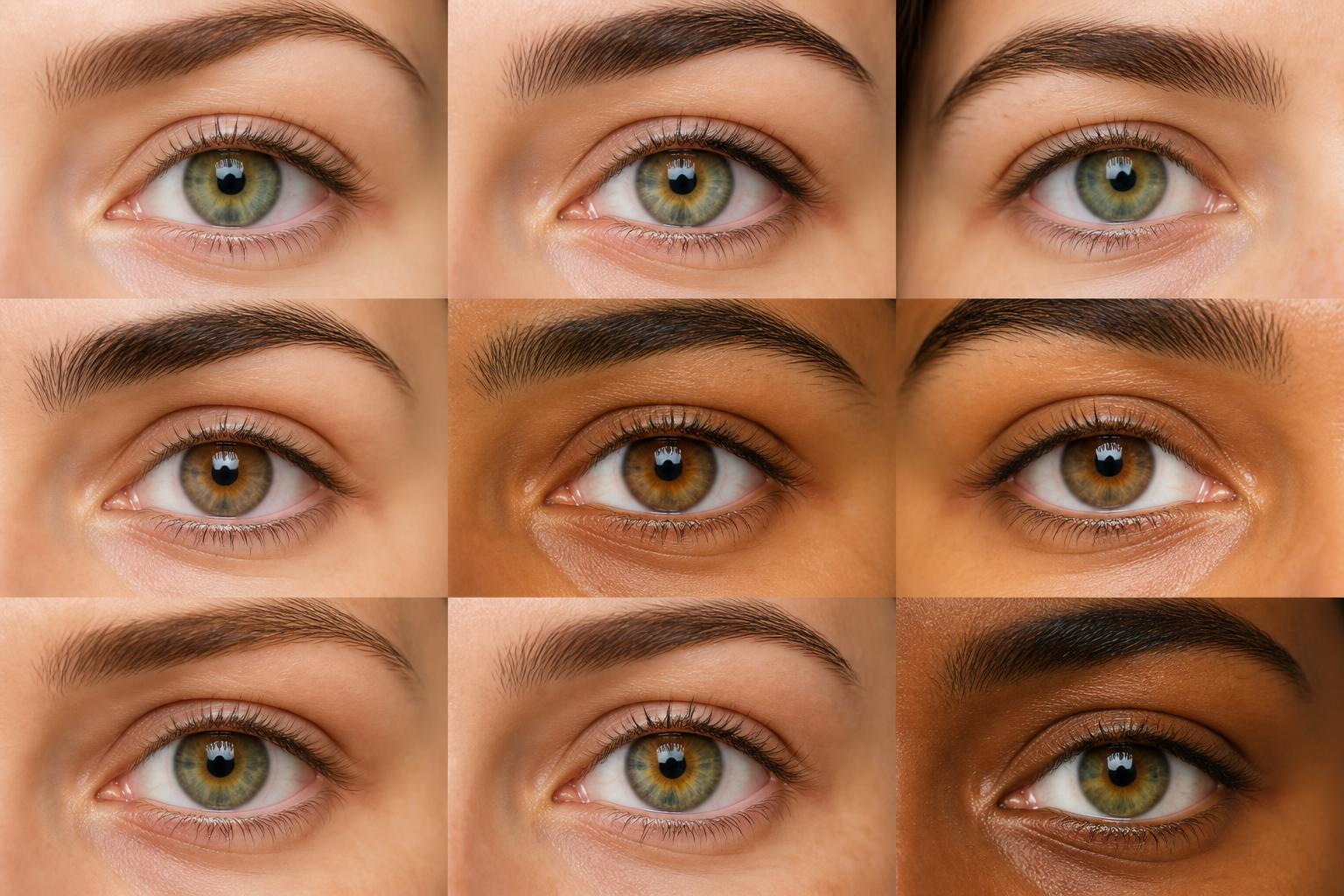
If you’re trying to tell green eyes and hazel eyes apart, you’re not alone. These two shades can look similar at first glance, especially in different lighting. The difference usually comes down to how much brown, gold, or amber is mixed into the iris and how evenly that color is distributed.
In this guide, we’ll compare green eyes and hazel eyes side by side, show you what to look for in real-world examples, and explain why some eyes may appear like a hazel green eye or a green hazel eye depending on the light.
Quick answer: how to tell green eyes and hazel eyes apart
Green eyes are usually more uniformly green, with tones that can range from pale moss to deep emerald. Hazel eyes usually contain a mix of green, brown, gold, or amber, and that mix often shifts depending on the angle and lighting.
If your eyes look mostly green with a slight golden ring or brown flecks, you may have green eyes with hazel traits. If the eye looks like a blend of green and brown across the iris, it is more likely hazel.
Green eyes vs. hazel eyes: simple visual comparison
| Feature | Green eyes | Hazel eyes |
|---|---|---|
| Main color impression | Mostly green | Green mixed with brown, gold, or amber |
| Color distribution | Often more even | Often mixed or layered |
| Light response | May brighten or deepen, but stays green | Can shift noticeably between green, brown, and gold |
| Common pattern | Solid green or green with slight variation | Multicolor iris, sometimes with a darker outer ring |
| Typical look | Clear, cool, leafy, or emerald tones | Warm, complex, and changing tones |
What makes hazel different from green?
The key difference is contrast. Green eyes tend to read as one main color. Hazel eyes often include more than one visible shade in the iris, especially a mix of green and brown. That’s why some people describe their eye color as green and hazel eyes, green eyes hazel eyes, or green and hazel eyes when the color seems to fall somewhere in between.
Hazel eyes may also appear to change more than green eyes. In daylight they can look greener, while indoor lighting may bring out brown or amber tones. This is why people sometimes use phrases like eye color hazel green or hazel green eye to describe eyes that seem to sit on the border between the two categories.
Common eye color patterns to look for
When comparing green eyes and hazel eyes, focus on the iris pattern rather than a single snapshot. A good way to identify the shade is to look at the whole eye in natural light.
- Solid green look: The iris appears mostly green with little visible brown.
- Green with gold flecks: Still often classified as green, especially if the golden tones are minor.
- Mixed green-brown blend: More likely hazel, especially if the color changes across the iris.
- Darker outer ring: Can appear in both green and hazel eyes and may make the eye look deeper in color.
- Central color variation: A brown or amber center can create a hazel look, especially near the pupil.
Examples of green, hazel, and in-between shades
Real eye colors rarely fit into a perfect box. Some eyes are clearly green, some are clearly hazel, and others fall into the middle. Here are a few common examples people use when describing them:
- Dark green hazel eyes: eyes that look green overall but include enough brown or gold to read as hazel in some light.
- Hazel dark green eyes: a similar in-between look, where darker green is dominant but warm tones still appear.
- Green hazel eye: a shorthand description for an iris that shifts between green and hazel tones.
- Eye color hazel green: often used when the eye looks hazel first, but green is still very visible.
If your eyes seem to change a lot from one environment to another, they may be hazel or a green-hazel blend rather than a single, solid green.
How lighting changes the way green and hazel eyes look
Lighting has a big effect on both green eyes and hazel eyes. Natural daylight can make green tones look brighter, while warm indoor light can bring out brown or gold. Clothing colors, makeup, and even the background behind you can also change the way the iris appears.
That means a person may look green in one photo and hazel in another. This is normal. The eye color itself is not changing instantly; the visible balance of colors is simply shifting with the light.
- Daylight: often makes green tones easier to see.
- Warm indoor lighting: can emphasize gold, amber, or brown.
- Flash photography: may flatten subtle color differences.
- Clothing and surroundings: can make the same eyes appear warmer or cooler.
Why some eyes look like both green and hazel
Some irises have uneven pigment distribution, which creates a blended look. In those cases, a person might not have purely green eyes or purely hazel eyes. Instead, the eye may show a mix that sits between categories. This is especially common when the iris has a green base with brown or amber near the pupil or scattered through the pattern.
For a deeper look at how eye color categories are organized, you may also find the Eye Color Chart: Names, Rarity & All Eye Shades helpful.
Are green eyes and hazel eyes related genetically?
Eye color is influenced by multiple genes, not just one. That’s why two people with similar family backgrounds can still end up with different shades. Green eyes and hazel eyes are both linked to variations in pigment amount and how pigment is distributed in the iris.
If you want a broader overview of inheritance patterns, see the Eye Color Genetics Chart: What Determines Eye Color?. It explains why certain shades can appear in families and why mixed colors like hazel green are possible.
If you’re curious whether your eyes fit a rare category, you can also compare them with the Rarest Eye Color: How to Compare and Identify Eye Color guide.
How to check your own eye color more accurately
To identify whether you have green eyes or hazel eyes, try comparing your eyes under the same conditions each time.
- Stand near a window with soft natural light.
- Look at both eyes separately in a mirror or clear photo.
- Notice whether the iris is mostly green or clearly mixed with brown/gold.
- Check whether the color is even across the iris or changes by section.
- Compare the look in daylight, indoor light, and shade.
If the result still feels unclear, a photo-based tool can help you explore the shade more closely. You can try the Eye Color Identifier app here: Eye Color Identifier on the App Store.
Related eye color guides you may want next
If you’re comparing neighboring shades, these guides can help you narrow things down:
- Eye Color Green: How to Compare and Identify Eye Color
- Hazel Eyes: Color, Rarity, Meaning & Examples
- Amber Eye Color: How to Compare and Identify Eye Color
- Blue Eye Color Shades: How to Compare and Identify Eye Color
FAQ: green eyes and hazel eyes
Can green eyes have hazel tones?
Yes. Green eyes can include small gold or brown flecks and still look mainly green. If the warm tones are stronger, the eye may be more accurately described as hazel or green-hazel.
Why do hazel eyes look different in photos?
Hazel eyes often change appearance with lighting, camera settings, and surroundings. A warm light source can make them look browner, while natural daylight can bring out more green.
Is a hazel green eye the same as green eyes?
Not always. A hazel green eye usually means the iris shows both green and hazel tones. If green is dominant and the mixed color is minor, it may still be classified as green.
Are dark green hazel eyes rare?
Some dark green hazel eyes can look uncommon because the color blend is subtle and varies with light, but rarity depends on population and genetics. A visual guide is usually more useful than guessing from one photo.
Can eye color change over time?
Minor changes in appearance can happen with lighting, age, or certain eye conditions. For general eye color changes in adults, see the guide on What Causes Eye Color to Change in Adults? 7 Real Reasons.
Final takeaway
When comparing green eyes and hazel eyes, the biggest clue is whether the iris looks mostly green or visibly mixed with brown, gold, or amber. Green eyes usually stay more uniform, while hazel eyes often shift and blend depending on light. If your eyes seem to sit between the two, you may have a green-hazel mix rather than a single solid shade.
If you want a closer look at your own eye color, try the Eye Color Identifier tool and compare it with our eye color guides for a clearer visual match.
Try the Whatcoloraremyeyes app
Use the app when you want a faster photo-based check before comparing details manually.