Eye Color Guide
Hazel Eye Color Chart: Visual Guide to Shades, Features, and Genetics
Explore a hazel eye color chart with shade examples, key features, genetics basics, and a quick way to compare hazel eyes with green, brown, and amber eyes.
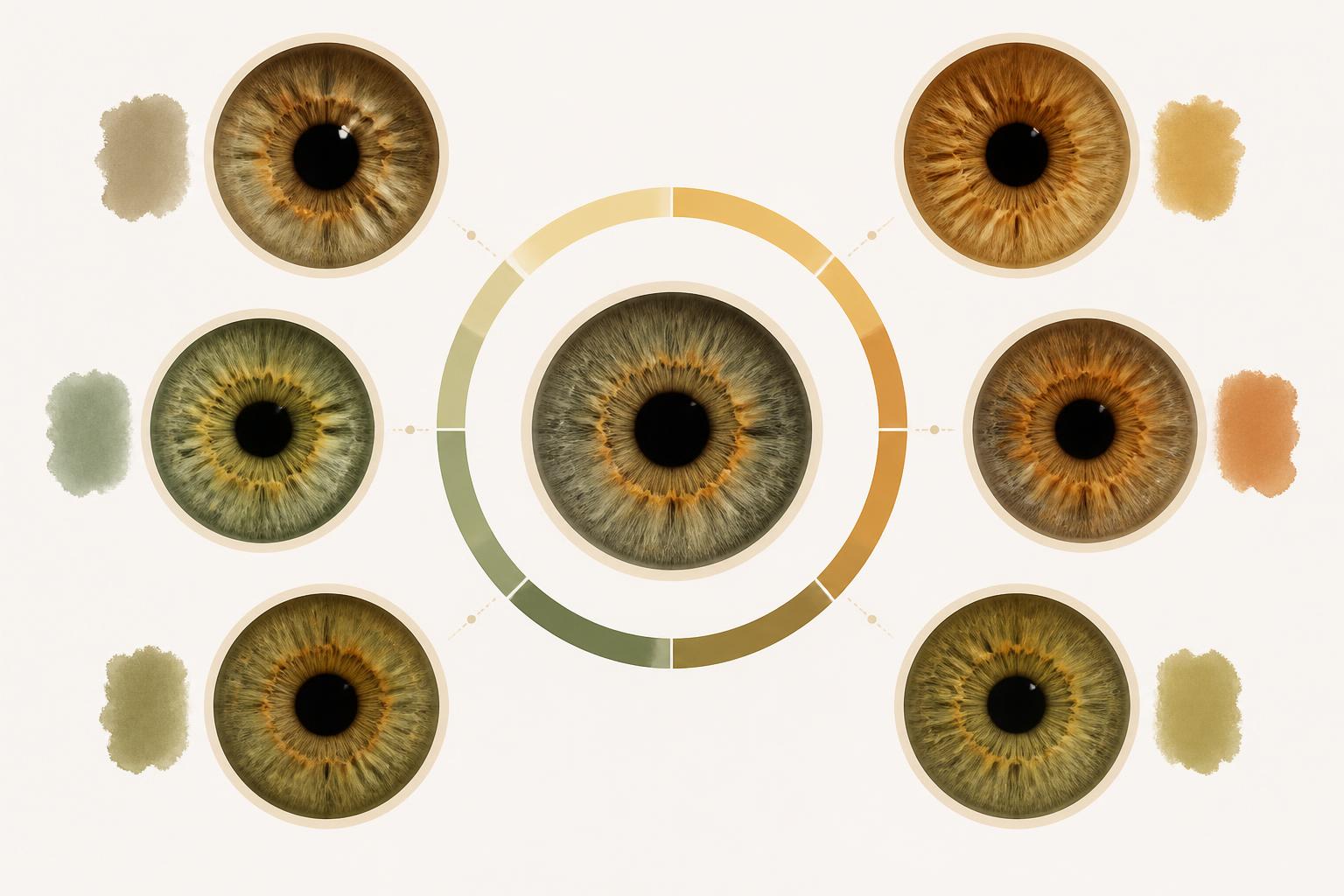
Hazel eyes are one of the most visually mixed eye colors, often showing a blend of brown, green, gold, and sometimes amber tones. If you are looking for a hazel eye color chart, this guide gives you a simple way to spot the main shades, compare them with nearby eye colors, and understand the basic genetics behind them.
In short, a hazel eye chart is useful because hazel is not a single flat color. The same eyes can look greener in sunlight, browner indoors, and more golden under warm light. That shifting look is what makes hazel eyes so distinctive.
Hazel eye color chart: quick visual guide
Use this eye color chart with hazel as a reference for the most common hazel shades and features. The goal is not to force every pair of eyes into one box, but to help you compare what you see.
| Hazel shade | Main look | Common features | Often confused with |
|---|---|---|---|
| Light hazel | Green-gold with soft brown | Bright, mixed, less dense brown pigment | Green eyes |
| Classic hazel | Balanced brown, green, and gold | Color shifts in different lighting | Central heterochromia, brown eyes |
| Golden hazel | Warm amber-brown with gold | Sunlit, glowing look, especially outdoors | Amber eyes |
| Brown-hazel | Mostly brown with hazel flecks | Subtle green or gold around the iris | Brown eyes |
| Green-hazel | Green-dominant with brown near the pupil or rim | High contrast, often more noticeable in bright light | Green eyes |
What makes hazel eyes look different?
A hazel eye chart is helpful because hazel eyes are defined by variation. The color you notice most can change based on the light, clothing, camera settings, and even the background color around the face. That is why one person may describe the same eyes as green hazel, while another calls them brown-gold.
Most hazel eyes show some combination of these visual features:
- A brown base with green or gold highlights
- A ring of darker pigment near the pupil
- Flecks or patches of different tones in the iris
- Noticeable color changes in sunlight or warm indoor light
- Less uniform color than standard brown eyes
If the eyes have a clear color split between the center and outer iris, that may point toward central heterochromia rather than a classic hazel pattern.
Different shades of hazel eyes chart: how to compare them
People searching for a different shades of hazel eyes chart usually want a simple side-by-side comparison. The easiest way to compare hazel is to look at dominance, contrast, and the way the eye reacts to light.
1. Compare the dominant tone
- If brown is strongest, the eye may be brown-hazel.
- If green stands out most, it may be green-hazel.
- If gold or amber is strongest, it may lean toward golden hazel.
2. Check the contrast pattern
- Soft, blended color changes often look like classic hazel.
- Sharp center-to-rim differences may suggest heterochromia-style variation.
- Very low contrast with only tiny flecks may be a brown eye with hazel tones.
3. Look in natural light
Hazel is easiest to identify in daylight. Indoor lighting can make the eyes look more brown, while sunlight can bring out green and gold tones. This is one reason an eye colour chart hazel reference should always be paired with real-world lighting checks.
Hazel eye genetics chart: what’s happening behind the color?
A hazel eye genetics chart is usually more helpful when it explains patterns rather than promising a single result. Eye color is influenced by multiple genes, and hazel eyes often reflect a middle ground in pigment levels and light scattering.
In simple terms, hazel eyes tend to have:
- More pigment than green eyes
- Less uniform pigment than many brown eyes
- Enough variation to create mixed tones
That is why hazel eyes can appear different from person to person and even from photo to photo. Genetics can suggest a tendency, but lighting and iris structure can strongly change how the color appears.
For a broader background on how eye color patterns are grouped, see the Eye Color Genetics Chart: What Determines Eye Color?.
Hazel vs. green, brown, and amber
Because hazel sits between several color families, it is commonly confused with nearby shades. Here is a quick comparison.
| Color | Typical look | How it differs from hazel |
|---|---|---|
| Brown | Mostly uniform brown | Hazel usually has visible green, gold, or amber variation |
| Green | Green is the dominant tone | Hazel typically has more brown or gold mixed in |
| Amber | Warm golden or coppery tone | Hazel is usually more mixed and less uniform |
| Gray | Cool, muted, low-saturation tone | Hazel is warmer and more colorful |
If you want a closer side-by-side comparison, these guides may help: Green Eyes and Hazel Eyes and Amber Eye Color.
How to read a hazel eye chart at home
If you are using an eye color chart hazel reference for your own eyes or someone else’s, follow these simple steps:
- Stand near a window or go outside in indirect daylight.
- Look at the iris from a normal conversation distance first.
- Then check the same eyes closer up for flecks, rings, and color shifts.
- Compare the dominant tone with brown, green, and amber examples.
- Repeat the check in warm indoor light to see what changes.
A helpful tip: take one photo in daylight and one indoors. Hazel eyes often look different between the two, which is exactly why a hazel eye chart can be more useful than a single label.
Signs you may be looking at hazel eyes
Here are the most common signs that point toward hazel:
- The eye does not look fully brown, fully green, or fully amber
- The iris has multiple visible tones
- Green or gold becomes stronger in bright light
- Brown appears more dominant in dim light
- The color changes slightly from one angle to another
Some people also search for a hazel eye chart because their eyes seem to belong to more than one category. That is normal. Eye color naming is descriptive, not exact.
FAQ about hazel eye color
Are hazel eyes rare?
Hazel eyes are less common than brown eyes and more common than some very light eye colors. Their rarity can vary by population and region.
Can hazel eyes change color?
The iris itself does not usually change color dramatically, but hazel eyes can appear to change because of lighting, clothing colors, makeup, and camera settings.
What is the difference between hazel eye color chart and eye color chart with hazel?
They mean nearly the same thing in practice. Both refer to a comparison chart that includes hazel as one of the eye color categories or examples.
Is there an exact hazel eye chart?
There is no single universal chart, because hazel includes several mixed shades. A good chart shows examples and visual cues rather than one fixed definition.
Can the app help identify hazel eyes?
Yes. If you want a quick visual check, try the Eye Color Identifier Analyzer for a simple comparison tool.
Final take
A hazel eye color chart works best as a visual guide, not a strict rulebook. Hazel eyes are usually a blend of brown, green, and gold, with the exact balance shifting depending on light and iris structure. If you are comparing your own eyes or creating a reference for readers, focus on the dominant tone, the amount of contrast, and how the color changes in daylight.
For more eye color comparisons, you can also explore the Eye Color Chart: Names, Rarity & All Eye Shades or try the site’s Eye Color Identifier to compare your result with other shades.
Try the Whatcoloraremyeyes app
Use the app when you want a faster photo-based check before comparing details manually.