Eye Color Guide
Blue Hazel Eyes: How to Spot the Blend and Tell It From Similar Shades
Learn how to identify blue hazel eye color, compare it with blue, green, and hazel eyes, and spot common patterns like a hazel ring or blue outer tone.
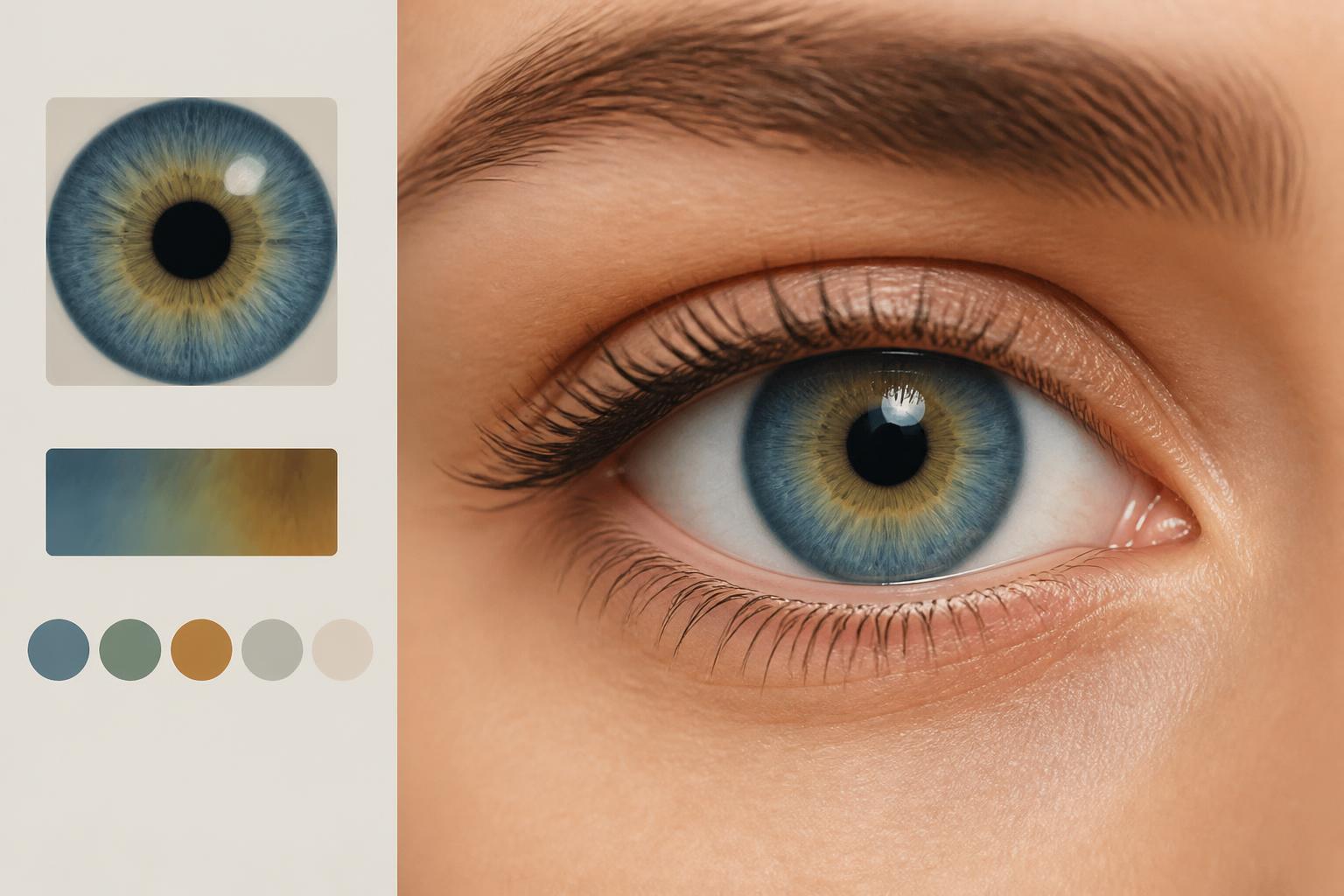
Blue hazel eye color is one of the most interesting mixed eye shades to compare because it can look different depending on lighting, distance, and the amount of brown or gold near the pupil. In some people, the eye reads as mostly blue with a warm hazel center. In others, it looks more like hazel eye color blue, with blue taking over the outer iris and hazel showing through in the middle.
If you are trying to tell whether you have blue hazel eyes, a blue hazel eye, or a similar mixed shade like blue eyes with hazel ring, this guide breaks down the visual clues in a simple way.
What blue hazel eye color usually looks like
Blue hazel eye color is not a single fixed shade. It is a mix pattern, which means the eye can appear more blue, more hazel, or somewhere between the two depending on the light. The most common visual signs are:
- A blue outer iris with a warmer center
- Gold, amber, or light brown near the pupil
- A hazel ring that may be thin or more noticeable
- Color that shifts from cool to warm across the iris
Some people describe this as blue with hazel eyes, while others say blue eyes hazel because the eye seems to have both colors at once. That is why a photo taken indoors may look different from one taken in daylight.
How to compare blue hazel eyes with similar eye colors
The easiest way to identify blue hazel eye color is to compare the iris in natural light and focus on three areas: the outer rim, the middle iris, and the ring around the pupil.
| Eye color pattern | What you may see | How it differs |
|---|---|---|
| Blue hazel eye color | Blue outer iris with hazel, gold, or brown mixed in the center | Looks like a blue base with a warm center blend |
| Blue eyes with hazel ring | Mainly blue iris with a visible hazel ring around the pupil | The hazel is concentrated near the center |
| Hazel eye with blue ring | Hazel base with a blue ring or blue outer edge | The warm color dominates, with blue at the perimeter |
| Dark blue hazel eyes | Deeper blue tone with brownish or amber flecks | The blue is darker and the hazel is subtler |
| Blue with hazel eyes | Blue and hazel appear split or blended across the iris | Neither color fully takes over |
Quick visual checks you can use at home
If you want a practical way to identify your eye shade, use a mirror near a window and compare what you see to a few standard observations.
- Check in natural daylight. Warm indoor lighting can make hazel tones look stronger than they are.
- Look at the center first. Hazels often show gold, copper, or brown near the pupil.
- Look at the outer iris. Blue hazel eyes often keep a clear blue edge or outer field.
- Notice the ring pattern. A strong hazel ring or blue ring can help separate a mixed color from a solid shade.
- Compare both eyes. Small differences between left and right eyes are common.
If your eye looks blue at a glance but has a warm center in close-up photos, you may be seeing a hazel eye color blue pattern rather than a fully blue iris.
Blue hazel eye color versus other common shades
Mixed eye colors are easiest to understand when compared with neighboring shades.
- Compared with true blue eyes: true blue eyes usually have a cooler, more even tone across the iris.
- Compared with hazel eyes: hazel eyes usually lean warmer overall, with green, brown, or gold mixed together.
- Compared with green eyes: green eyes are often more uniform in their green cast, while blue hazel eyes usually show a stronger blue base.
- Compared with gray eyes: gray can look soft and muted, but it usually lacks the warm central flecks common in blue hazel eyes.
For a broader comparison with other mixed or less common shades, you may also like this guide to unusual eye color or the related chart on blue eye color shades.
Why the color can change in photos
Blue hazel eyes can shift appearance for a few simple reasons:
- Lighting: Bright daylight often brings out the blue outer tones.
- Camera flash: Flash can wash out subtle hazel detail.
- Clothing colors: Cool or warm clothing can change how the iris appears next to skin and fabric tones.
- Pupil size: A larger pupil can hide some of the center color.
That means a person may look like they have dark blue hazel eyes in one photo and a more obvious blue hazel eye in another. This is normal for layered iris color, not a sign that the eye changed color completely.
Where central heterochromia fits in
Some blue hazel eye color patterns are related to central heterochromia, which means the center of the iris has a different color from the outer section. In these cases, the most noticeable feature is often a hazel or amber ring near the pupil with a blue outer iris.
If you want to see more examples of that ring pattern, check the guide on central heterochromia. It is one of the most useful comparisons when deciding whether your eye is blue hazel, blue with hazel eyes, or hazel eye with blue ring.
How to use a chart or eye color test
Because mixed shades can be hard to judge by memory alone, a chart or online test can help you compare features side by side. A good process is:
- Take a clear photo in daylight
- Compare the iris to a reference chart
- Look for the dominant base color first
- Then note the secondary ring or flecks
You can also try the Eye Color Test to get a quick comparison and see whether your eyes align more with blue, hazel, or a blended category.
What to look for in common blue-hazel patterns
Here are a few example descriptions that may help when you are labeling the shade:
- Blue hazel eyes: blue iris with a small warm center
- Blue eyes with hazel ring: blue overall, but a clear brown-gold ring around the pupil
- Hazel eye with blue ring: warm hazel base with a cool blue rim
- Dark blue hazel eyes: deeper blue tone plus subtle amber or brown flecks
When in doubt, avoid forcing the eye into a single label. Mixed eyes often sit between categories, and that is exactly what makes them visually distinct.
Related eye color guides
If you are comparing blue hazel eye color with neighboring shades, these guides may help:
Tip: if your eye looks blue from a distance but shows gold, brown, or hazel near the pupil in close-up light, you are likely looking at a mixed blue hazel pattern rather than a single solid eye color.
FAQ
Is blue hazel eye color rare?
Blue hazel eye color is less common than standard blue or brown eye color, but rarity depends on how the shade is defined. Mixed-eye patterns can be hard to classify, so comparison matters more than a strict label.
Can blue hazel eyes look more blue or more hazel?
Yes. The same eyes can look more blue in daylight and more hazel in warm indoor light. That shift is common in mixed iris color.
What is the difference between blue hazel eyes and blue eyes with hazel ring?
Blue hazel eyes usually have a broader mix across the iris, while blue eyes with hazel ring typically have a mostly blue iris with a noticeable warm ring near the pupil.
How can I compare my eye color more accurately?
Use natural light, compare the center and outer iris separately, and try a structured reference tool or chart. A quick starting point is the Eye Color Identifier app, which can help you compare what you see against common eye color patterns.
Final take
Blue hazel eye color is best understood as a blend, not a single flat shade. Whether you call it blue hazel eye, blue with hazel eyes, or hazel eye color blue, the key is to look for the balance between the blue outer iris and the hazel or gold center. A simple daylight comparison, a chart, and a side-by-side test can make the difference much easier to see.
If you want a quicker visual comparison, try the Eye Color Identifier app and compare your result with the eye color guides on this site.
Try the Whatcoloraremyeyes app
Use the app when you want a faster photo-based check before comparing details manually.