Eye Color Guide
Brown, Blue, Green Eyes: Fast Ways to Tell the Difference
brown blue green eyes: Compare brown, blue, and green eyes with a simple visual guide, examples, and a quick checklist for spotting mixed colors.
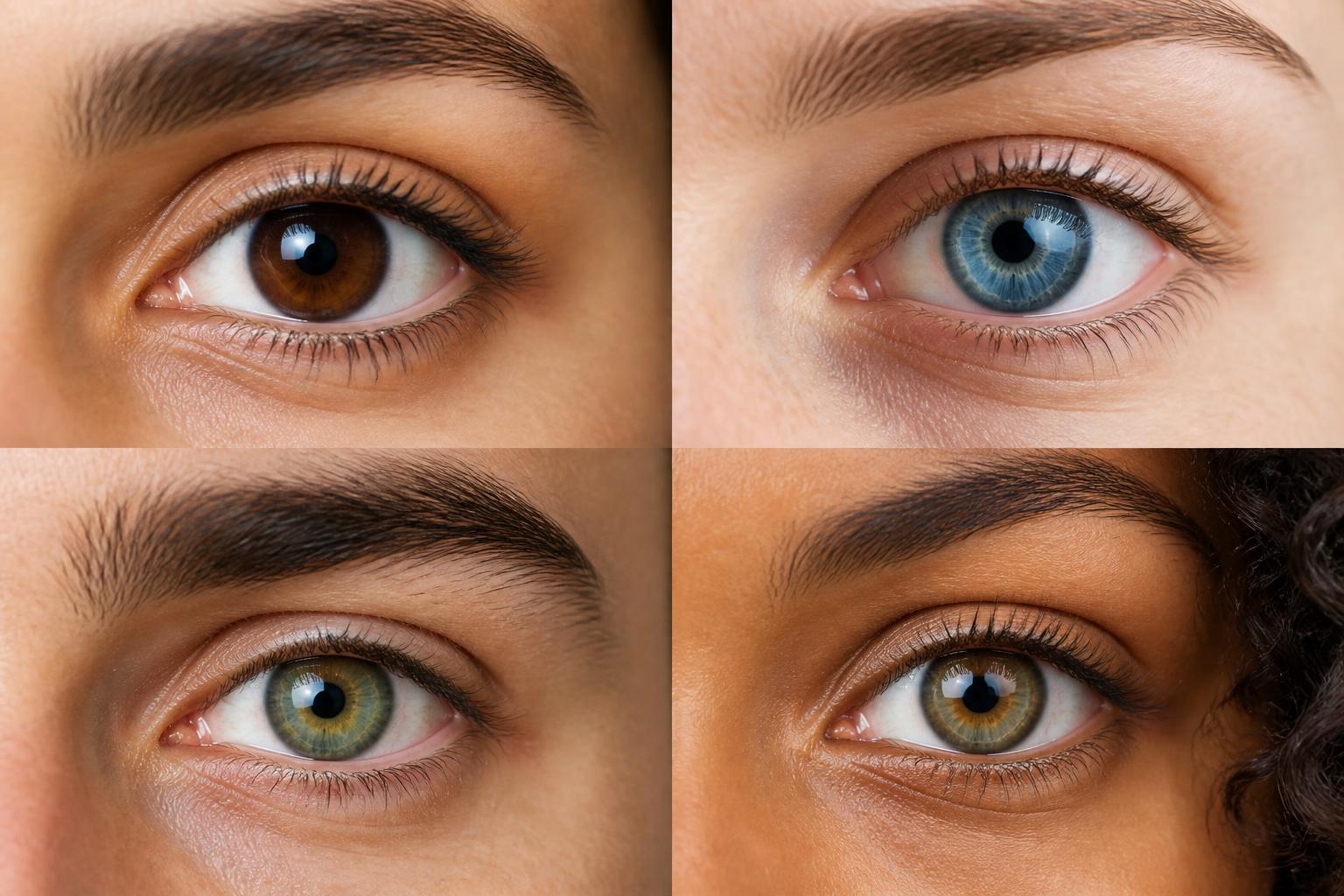
If you’re trying to sort out brown, blue, green eyes, the quickest answer is this: blue eyes usually look clear and low-pigment, green eyes often show a noticeable green cast with gold or gray mixed in, and brown eyes have more melanin and read as deeper, warmer, or darker overall. The single best clue is the dominant color you see across most of the iris, not the tiny flecks near the pupil or the limbal ring at the edge.
This guide compares the main options side by side so you can tell whether you are looking at brown, blue, blue-green, or brown-blue-green eyes mixed. It also covers what changes are normal in different lighting and when a color shift is worth asking a clinician about.
How to compare eye color
Use the same criteria for every option so the comparison stays fair. First, look at what the iris does in daylight and indoor light. Second, note what it needs to look its clearest, such as natural light or a close photo. Third, consider what it costs in effort: no tool, a mirror, or a camera app. Fourth, note where each option falls short, especially when colors blend or the lighting is warm.
| Option | What it does | What it needs | Where it falls short |
|---|---|---|---|
| Brown eyes | Shows a darker, warmer iris with low visible light reflection | Natural light helps separate deep brown from hazel | Can look lighter or amber in strong sun |
| Blue eyes | Looks cool-toned, pale, or vivid blue across most of the iris | Daylight and a close view help reveal the true shade | May read gray or blue-gray in indoor light |
| Green eyes | Shows a green cast, often with gold, gray, or blue mixed in | Neutral light and a steady photo are useful | Easy to confuse with hazel or blue-green eyes |
| Mixed-color eyes | Combines two or more visible tones in the same iris | Clear light and a close image help show the blend pattern | Lighting can hide the secondary color |
| App-based identifier | Helps compare iris color from a photo | A clear, well-lit eye photo and a phone | Still depends on image quality and cannot replace your own judgment |
1) Brown eyes
Verdict: Best when the iris reads mostly dark, warm, or deep across the full eye.
Brown eyes are usually the easiest of the brown blue green eyes group to spot because the overall tone is darker and less translucent. The color can range from light brown to almost black-brown, and it may show honey or amber notes in sunlight. That makes the main reading simple: if most of the iris looks brown in everyday light, brown is the right starting label.
Brown is good at holding a stable look across different lighting. It is less likely than blue or green to change character from room light to daylight. The limitation is that lighter brown can overlap with hazel, amber, or mixed eyes, so a quick glance is not always enough.
If you want a deeper breakdown of brown tones, see Brown Eye Color: Shades, Genetics, and Variations.
2) Blue eyes
Verdict: Best when the iris looks cool, light, and mostly blue without a strong green or brown cast.
Blue eyes often appear clear, icy, gray-blue, or saturated blue depending on light and contrast. The useful fact is that blue eyes usually do not contain blue pigment in the way paint does; the visible blue look comes from how light scatters in the iris. The practical reading is that blue eyes can seem brighter outdoors and flatter indoors.
Blue eyes are strong at looking distinct in daylight, especially when the iris has a clean blue base. The limitation is that they can be mistaken for gray eyes or blue-gray eyes when the light is soft or overcast. They can also appear more muted in photos than in person.
For a fuller visual comparison, use Blue Eye Color Shades: From Ice Blue to Deep Sapphire.
3) Green eyes
Verdict: Best when the iris shows a true green cast rather than just a mix of brown and gold.
Green eyes are often the trickiest part of blue brown and green eyes comparisons because the green may sit beside gold, gray, or blue. The fact to watch is the dominant cast across the iris. The interpretation is that a green eye usually still reads green even if it has warm flecks or a darker ring near the pupil.
Green is good at showing a distinct color when the light is neutral and the photo is sharp. Its limitation is overlap. Many people who think they have green eyes actually have hazel or blue-green eyes mixed, especially if the iris changes with the background or clothing.
If you want to separate these close lookalikes, read Green Eyes vs Hazel Eyes: What Sets Them Apart.
4) Blue-green eyes
Verdict: Best when both blue and green are visible, but neither one fully takes over.
Blue-green eyes sit between the clearer single-color categories. The fact is that the iris can show blue in one area and green in another, or one tone can shift depending on light. The reading is that blue-green eyes are often best described as mixed rather than strictly blue or strictly green.
This option is good at explaining eyes that change appearance from one setting to another. The limitation is that it can be overused as a catch-all label. If the iris is mostly blue with only a green edge, or mostly green with a blue center, the more specific description is better.
For pattern-based examples, use Blue Green Eye Color: How to Tell the Shade, Blend, and Pattern.
5) Brown-blue-green mixed eyes
Verdict: Best when the iris visibly blends brown, blue, and green instead of settling into one clean label.
Brown blue green eyes mixed are usually the hardest to name quickly because they combine warm and cool tones. The fact is that the iris may have a brown center, a green mid-ring, and a blue or gray outer area. The interpretation is that the eye color is best understood as a blend pattern, not a single flat color.
This category is useful when you need to describe a real photo honestly. It is also useful when different family members describe the same eyes differently. The limitation is that lighting can hide one of the colors, so a bright room can make mixed eyes look more brown, while shade can make them look more blue or green.
For another blend reference, see Bluish Hazel Eyes: How to Tell the Blend From Green, Gray, and Gold.
6) App-based eye color analysis
Verdict: Best when you want a photo-based second look without guessing from memory alone.
The Eye Color Identifier Analyzer app at https://apps.apple.com/us/app/eye-color-identifier-analyzer/id6749776540 fits this task because it is designed to help compare iris color from an image. The fact is that a phone app can inspect a photo more consistently than a quick glance. The reading is that it can be helpful for comparing subtle blue, green, and brown blends, especially when you want to review the same eye more than once.
Its limitation is that it still depends on photo quality. Poor lighting, glare, filters, and heavy makeup can change the result. It also cannot tell you more than the image contains, so it should be treated as a comparison tool rather than a final authority.
If you want to try a visual check after reading this guide, the app is a reasonable next step: Open Eye Color Identifier Analyzer in the App Store.
Quick visual checklist
- Look at the whole iris, not just the center.
- Check it in daylight and again indoors.
- Decide which color appears most of the time.
- Note whether the eye has one color or a clear blend.
- Watch for a gold, gray, or brown ring that changes the label.
- If the photo looks different from the mirror, compare both in neutral light.
When eye color changes deserve a clinician
Small differences in how brown, blue, or green eyes look from day to day are usually caused by light, clothing, pupils, and camera settings. A sudden change is different. If an eye color changes quickly, or if the change comes with pain, redness, blurred vision, light sensitivity, swelling, or a new white or cloudy area, a clinician should evaluate it. Tell them when you first noticed the change, whether it affects one eye or both, and whether you have injury, illness, contact lens wear, or new medications in the picture.
Which to choose
If you mostly need the simplest label, choose the color that dominates the iris in daylight. If the eye looks mostly dark and warm, pick brown. If it looks mostly cool and pale, pick blue. If it shows a clear green cast, pick green. If it shifts between two or three tones, use a mixed label such as blue-green or brown-blue-green mixed eyes. If you want a photo-based second opinion, try the Eye Color Identifier Analyzer app.
FAQ
How do I tell brown blue green eyes from hazel eyes?
Hazel usually reads as a blend with a stronger brown or gold base, while brown blue green eyes mixed can show more obvious blue and green areas. Compare the same eye in daylight and look for the dominant color across most of the iris.
Why do blue brown and green eyes look different in different lighting?
Lighting changes how the iris reflects light and how strong each color appears. Blue can look gray, green can look gold, and brown can look lighter in bright sun. The best label is the one that fits the eye in neutral light, not only in one photo.
Can one eye color be a mix of blue green and brown?
Yes. Mixed irises can show more than one visible tone, especially near the pupil, mid-ring, and outer edge. In that case, it is better to describe the blend than force the eye into a single color.
What is the easiest way to compare eye color at home?
Use natural light, avoid filters, and compare both eyes side by side. A clear front-facing photo can help, and a dedicated app can give you a second look if the blend is hard to read.
If you want to keep comparing close shades after this, the site also has visual guides for Blue Gray Eye Color, bluish hazel eyes, and blue hazel eyes.
For more unusual comparisons, start from the homepage at whatcoloraremyeyes.com.
Try the Eye Color Identifier app
Use the app when you want a faster, more organized starting point before comparing details manually.