Eye Color Guide
Blue Eye Color Shades: From Ice Blue to Deep Sapphire
Learn how to compare blue eye color shades, from dark blue eye tones to the lightest blue eyes, with examples, a simple chart, and identification tips.
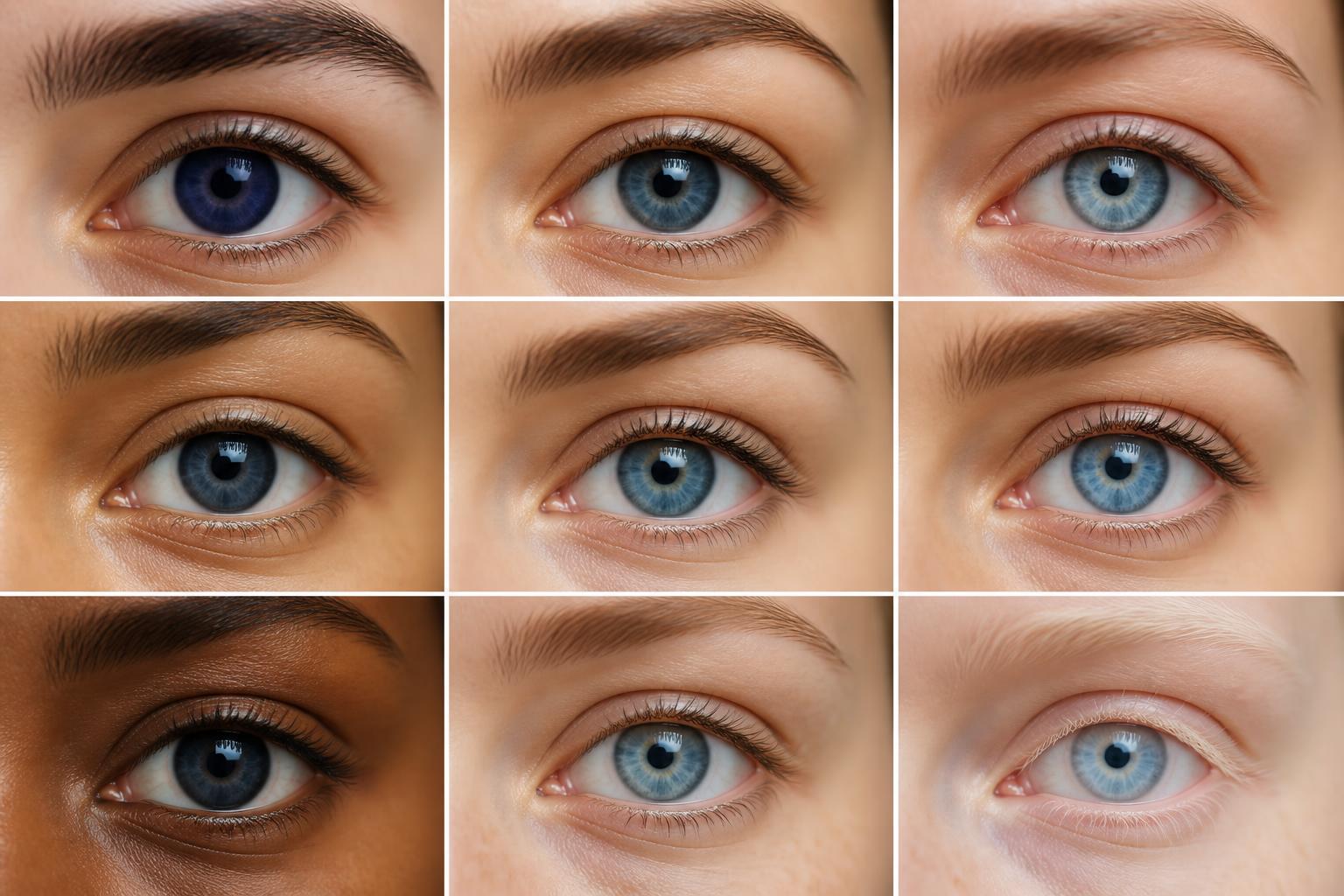
If you’ve ever looked at a photo and wondered whether someone has blue eyes, gray-blue eyes, or a very pale shade, you’re not alone. Blue eye color shades can look very different depending on lighting, makeup, clothing, camera settings, and the amount of pigment in the iris.
This guide breaks down the main different types of blue eyes, shows how to compare a dark blue eye with a lighter one, and gives you a practical way to identify a blue eyes shade more confidently. If you want a quicker digital check, you can also try the Eye Color Identifier app.
Quick answer: what counts as blue eye color shades?
Blue eyes usually have low melanin in the iris, which lets light scatter in a way that creates a blue appearance. But “blue” is not just one color. In real life, you’ll see several blue eye color shades, including:
- Dark blue eye: deeper, richer blue with a stronger navy or steel-blue look.
- True medium blue: classic blue with balanced brightness and depth.
- Gray-blue: blue eyes that look muted or cool-toned, often with a smoky cast.
- Ice blue: very light, pale blue with a silvery look.
- Blue-gray: a mix that can shift between blue and gray depending on light.
So when people say “blue eyes,” they may be referring to several different shades, not just one fixed color.
How to compare blue eyes correctly
To identify a blue eyes shade, compare the eye against a neutral setting. Bright sunlight, warm indoor bulbs, and colored backgrounds can all distort what you see. The best comparison happens when the image or person is viewed under soft natural light.
Use these steps:
- Look at the iris only, not the pupil or the whites of the eyes.
- Check the dominant color first: blue, gray-blue, blue-green, or blue with amber flecks.
- Notice depth: is it deep and saturated, or light and airy?
- Compare both eyes. Some people have different blue eyes in each eye, or slight variation from one eye to the other.
- Watch how the color changes in different lighting before deciding on the main shade.
If you’re comparing photos, keep in mind that camera white balance can make blue eyes look cooler, darker, or more faded than they are in person.
Simple chart for identifying blue eye shades
| Shade | How it usually looks | Common visual clues |
|---|---|---|
| Dark blue eye | Deep, rich blue | Strong saturation, may look navy or steel-blue |
| Classic blue | Balanced medium blue | Clear blue without heavy gray tones |
| Blue-gray | Muted blue | Soft, smoky, less saturated appearance |
| Ice blue | Very pale blue | Light, bright, sometimes silvery look |
| Blue with flecks | Blue base with small color variations | May show gold, gray, or darker ring patterns |
This chart is a starting point, not a medical or genetic diagnosis. Eye color can vary a lot from person to person, and even from photo to photo.
What makes blue eyes look different?
The same pair of blue eyes can appear to change shade depending on several visual factors. That’s why two people with similar genetics may still have noticeably different-looking eyes.
- Lighting: Natural daylight usually shows the truest color.
- Pupil size: A larger pupil can make the iris appear darker.
- Clothing and makeup: Cool tones can make blue eyes seem brighter.
- Surrounding colors: A green or gray background can affect color perception.
- Photos and filters: Editing often shifts blue toward gray or bright cyan.
That’s why one person’s lightest blue eyes may look icy in one photo and soft gray-blue in another.
Different types of blue eyes you may notice
When people talk about different blue eyes, they usually mean the subtle color variations that exist within the blue family. Here are a few common examples:
- Deep blue: often appears darker around the outer iris.
- Sky blue: lighter, clearer blue with a fresh appearance.
- Gray-blue: cool and low-saturation, sometimes almost silver.
- Ice blue: very pale, near-translucent-looking blue.
- Blue with central color variation: a blue base with a warmer ring or mixed center pattern.
Some eyes may sit between categories. For example, a person might have a blue iris that looks gray indoors but bright blue outside. That doesn’t mean the eye color changed; it means the visible shade shifted with the light.
Blue eye meaning: what people usually mean by it
When people mention blue eye meaning, they may be asking about appearance, rarity, or cultural symbolism. In an eye-color guide, it’s best to keep the meaning simple and visual:
- Blue eyes are usually described by their shade, not by personality.
- The term can refer to a broad range of eye colors from pale to deep blue.
- Blue eyes may look especially striking because the color is often high-contrast against the sclera and surrounding features.
Important note: eye color does not tell you anything reliable about someone’s personality, behavior, or character.
How blue compares with other eye colors
Sometimes it helps to compare blue eyes with nearby categories, especially if the shade is muted or mixed. Blue can overlap visually with gray, green, amber, hazel, or brown in certain lighting.
If you’re unsure whether an eye is truly blue or closer to another shade, these related guides may help:
- Eye Color Gray: How to Compare and Identify Eye Color
- Eye Color Green: How to Compare and Identify Eye Color
- Eye Color Brown: How to Compare and Identify Eye Color
For a broader overview of all shades and naming conventions, the Eye Color Chart: Names, Rarity & All Eye Shades can also be useful.
Are blue eyes rare?
Blue eyes are less common globally than brown eyes, but rarity depends on population and region. In some areas, blue eyes are relatively common, while in others they are much less frequent.
For a deeper look at rarity across eye colors, you can explore the Rarest Eye Color guide and the Eye Color Genetics Chart for a simple genetics overview.
Tips for identifying the lightest blue eyes
The lightest blue eyes are often the most difficult to classify because they can look nearly silver, gray, or even white-blue in bright light. To identify them more accurately:
- Look at the eye in daylight rather than flash photography.
- Compare it against a white or neutral background.
- Check whether the eye has any visible gray cast or faint outer ring.
- Look for consistency across several photos or angles.
If the color seems to shift a lot, it may still be a very light blue shade rather than a different eye color entirely.
When blue eyes show mixed patterns
Some blue eyes include a second color ring or speckling. That doesn’t make them less blue; it just means the iris has extra variation. A common example is a blue iris with a warmer or darker center.
To understand pattern-based variation, you may also want to read about Central Heterochromia: Meaning, Rarity & Eye Examples. This can be especially helpful if your eye appears blue at the outer edge but different in the middle.
FAQ about blue eye color shades
What are the most common blue eye color shades?
The most common shades people notice are classic blue, dark blue eye tones, gray-blue, and very light ice blue. The exact look depends on lighting and how much pigment is in the iris.
Can blue eyes look different in photos?
Yes. Blue eyes can change appearance a lot in photos because of flash, exposure, and white balance. A camera may make the eyes look darker, brighter, or more gray than they are in person.
Are dark blue eyes the same as gray eyes?
Not always. A dark blue eye usually still has a blue base, while gray eyes tend to look more muted and less saturated. However, the two can be easy to confuse in low light.
What is the blue eyes shade with the most contrast?
Usually the most noticeable contrast comes from deep blue or bright ice-blue eyes, especially when paired with darker lashes or brows. But the effect can vary by person.
Can one person have different blue eyes?
Yes, slight differences between the two eyes are common. Some people also have one eye that appears more gray-blue and the other that looks more clearly blue.
Try the Eye Color Identifier
If you want a quick way to compare shades, use the Eye Color Identifier app as a soft starting point. It can help you look more closely at color differences before deciding whether an eye is dark blue, light blue, or somewhere in between.
For more eye-color comparisons and simple identification guides, start with the site homepage at whatcoloraremyeyes.com.
Try the Whatcoloraremyeyes app
Use the app when you want a faster photo-based check before comparing details manually.